As and when it looks supportive
Via Russell Brown on Bluesky, the Herald has a report on the increases in people being charged with cannabis possession. Charges fell by about 1/3 from 2017 to 2021, in parallel with increasing evidence that arrests for possession didn’t really have social license, but then started rising and now are back at nearly 2017 levels.
So what do the police say? Well, the Herald reports
Director of the National Organised Crime Group Detective Superintendent Greg Williams says wastewater testing in the Auckland and Northland region shows cannabis consumption spiking in July 2024.
“If you look at that charging data, it actually perfectly almost reflects what looks like a significant increase in cannabis consumption.”
We can look at the charging data, and the Herald does. We can’t look at the wastewater cannabis data, though. On the same day in the Herald there was a story on the newest results from wastewater drug analyses. The story reported estimates of meth, MDMA, and cocaine use. As expected, there’s a lot more meth than anything else, but there’s a potentially worrying increase in cocaine (it’s not so much that cocaine is worse than meth, but it’s a new supply chain). There was no comment in the story on cannabis use. There were related stories at One News and RNZ and Newstalk ZB.
If you go to the NZ Police webpage on wastewater drug testing you see
The drugs tested for include methamphetamine, MDMA, cocaine, fentanyl, and heroin. These reports focus on methamphetamine, MDMA and cocaine as these drugs are routinely detected by the programme.
At PHF Science (former ESR) you can find plenty of pages talking about their efforts in testing for meth, MDMA and cocaine, such as this one on the 2024 spike in meth, or this research paper with the mind-numbing details of how they do the testing, or this drug harm page where they say
To date, wastewater testing has been used to measure consumption of illicit drugs including methamphetamine, MDMA, cocaine, heroin and fentanyl.
Neither the police nor PHF Science publish cannabis-use estimates from wastewater. The reason they don’t publish the estimates is they aren’t very good. According to a research report from PHF Science,
However, certain characteristics of cannabis – such as it being lipophilic, not dissolving well in water and its tendency to stick to surfaces such as wastewater pipes – have made analysis in wastewater more difficult. Additionally, due to the considerable chemical differences between cannabis and the other illicit substances being monitored it cannot be added to the same analysis workflow. At this stage there is still too much uncertainty for cannabis measurements to be reliably quantifiable. However, the monitoring data can still be used in trend analyses
They do measure cannabis at five sites around the country, and as the research report says, the data could still be used in trend analyses. But popping up with a claim about two regions from undisclosed data about one time period isn’t a credible trend analysis.
What other data are there?
I don’t find the NZ Drug Trends Survey all that convincing on a detailed level, but its questions asking people who admit to using illegal drugs about which drugs they use should also be ok for trend analyses, and their cocaine reports show a similar trend to the wastewater data. They see a decrease and then increase in daily or weekly cannabis use over the time period we’re talking about, but to a much smaller extent: 68% of respondents at the peak, then down to 57%, then up to 70% for the most recent data. That’s about a 15% decrease and corresponding in regular cannabis use among regular drug users. Also, a big spike in population cannabis use would increase the number of regular drug users, and show up as a decrease in the proportion regularly using other drugs, which we don’t see.
The NZ Health Survey asks about drug use. The Drug Foundation has collected their data (along with other data sources) and it doesn’t show a pattern anything like the police charging data (click to embiggen, as always)
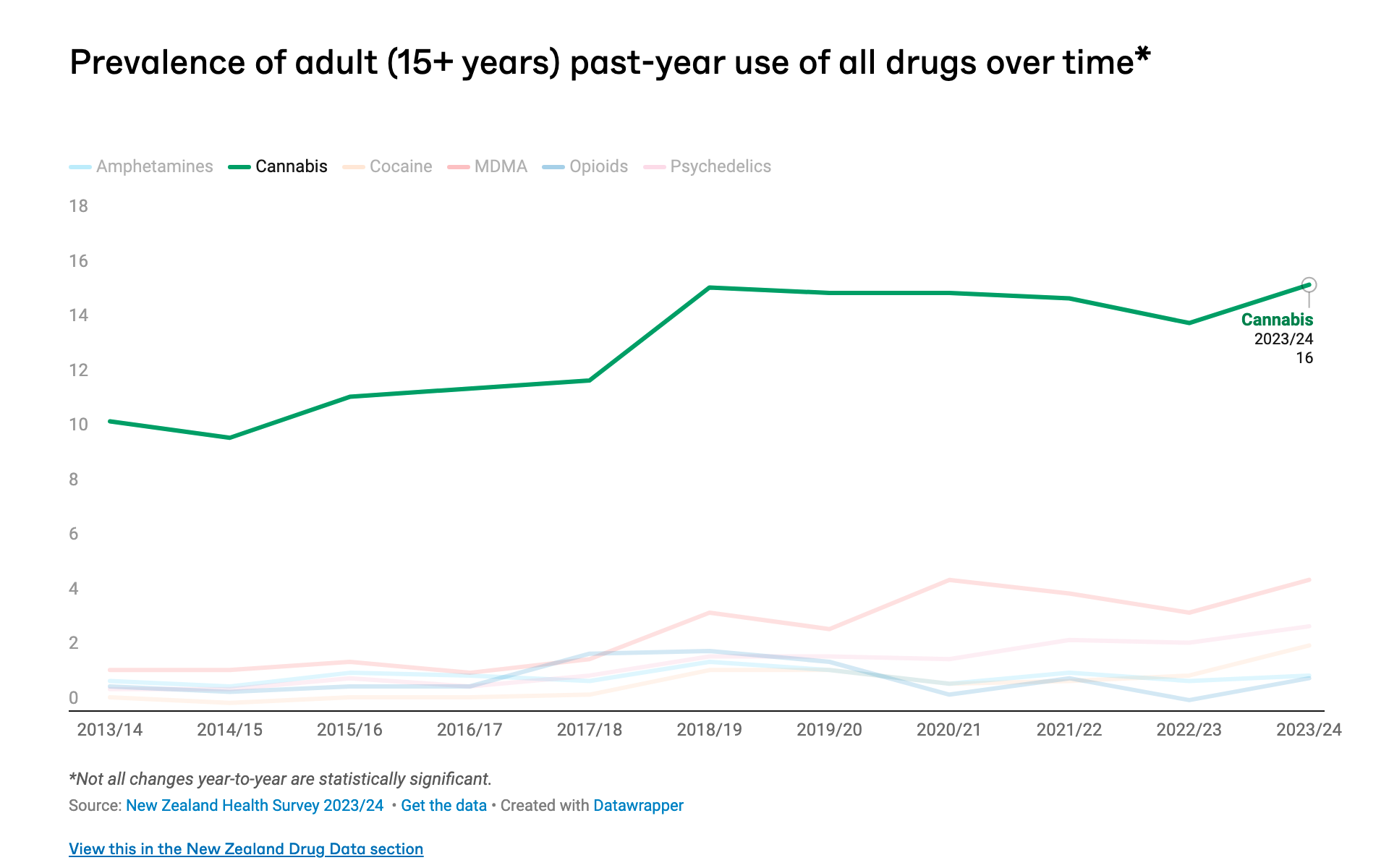
So, I’m not convinced by the bare assertion that wastewater data show the police are just picking up the same fraction of a varying drug-user population. If the police want to use trends in the cannabis wastewater data to influence public policy they should publish the complete data series, with all the attached caveats from the scientists behind the testing (who I do trust).

Thomas Lumley (@tslumley) is Professor of Biostatistics at the University of Auckland. His research interests include semiparametric models, survey sampling, statistical computing, foundations of statistics, and whatever methodological problems his medical collaborators come up with. He also blogs at Biased and Inefficient See all posts by Thomas Lumley »
Comments
Add a comment
First time commenting? Please use your real first name and surname and read the Comment Policy.
This may be a case where people’s safety depends on the police fudging their information sources.
2 days ago
Gang patch ban ‘likely’ behind increase in drug possession charges, Justice Ministry CEO says
Under questioning by Labour’s Ginny Andersen, he said it was only a hypothesis, but the increase was likely due to the new gang patch ban, which gives police more[personal] search powers than before.
“It’s quite likely that because there are more searches happening now there will be more drugs found, and that has seen an increase in the possession charges for both cannabis and methamphetamine.”
https://www.rnz.co.nz/news/top/580874/gang-patch-ban-likely-behind-increase-in-drug-possession-charges-justice-ministry-ceo-says
2 days ago