Posts written by Thomas Lumley (2645)

avatar

Thomas Lumley (@tslumley) is Professor of Biostatistics at the University of Auckland. His research interests include semiparametric models, survey sampling, statistical computing, foundations of statistics, and whatever methodological problems his medical collaborators come up with. He also blogs at Biased and Inefficient

August 19, 2014

Fortune cookie endings

Or, often in NZ papers, “… in the UK”.

There’s a Herald story with the lead

More than 12,000 new cases of cancer every year can be attributed to the patient being overweight or obese, the biggest ever study of the links between body mass index and cancer has revealed.

Since there about about 20,000 new cases of cancer a year in NZ, that would be quite a lot.  The story never actually comes out and says the 12,000 is for the UK, but it is, and if you read the whole thing it becomes fairly clear.  It still seems the sort of context that a reader might find helpful.

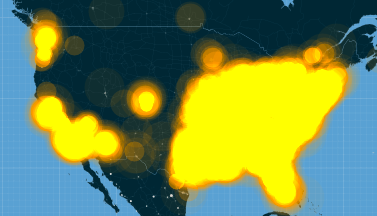
“More maps that won’t change your mind about racism in America”

From floatingsheep.org

sheep

Ultimately, despite the centrality of social media to the protests and our ability to come together and reflect on the social problems at the root of Michael Brown’s shooting, these maps, and the kind of data used to create them, can’t tell us much about the deep-seated issues that have led to the killing of yet another unarmed young black man in our country. And they almost certainly won’t change anyone’s mind about racism in America. They can, instead, help us to better understand how these events have been reflected on social media, and how even purportedly global news stories are always connected to particular places in specific ways.

August 18, 2014

Health/nutrition claims: baby and bathwater

Australia and New Zealand are introducing new food labelling legislation that will reduce the scope for bogus health and nutrition claims (the only bogus claims allowed will be the ones that slipped into the official code).  This is a Good Thing, as I have said in the past.

The legislation also says you can’t make health claims about booze. This is probably a Good Thing, although I don’t see why calorie/carbohydrate claims shouldn’t be allowed.  However, there’s a serious bug in the standards: one of the claims that’s specifically disallowed for alcoholic beverages is “gluten-free.”

It’s true that “gluten-free” has become a trendy bogus nutrition claim, but it’s also vital health information for some people, particularly those with coeliac disease. In that context, “gluten-free” is more like an allergen warning (“May contain nuts”) than a nutrition warning.  In fact, if you look at the section on “Mandatory Warning and Advisory Statements and Declarations”, Clause 4 includes

Cereals containing gluten and their products, namely, wheat, rye, barley, oats and spelt and their hybridised strains other than where these substances are present in beer and spirits standardised in Standards 2.7.2 and 2.7.5 respectively

along with peanuts, soybeans, eggs, milk, etc.  That is, declaring the presence of gluten is mandatory except in beer, where it is the only one of the Clause 4 mandatory warnings that becomes forbidden.  Banning gluten-free labelling on beer is deliberate and planned, it didn’t just fall between the cracks.

Since this is a trans-Tasman law, it’s going to be a pain to revise.  There seems to be one possible loophole. In the Nutrition/Health claims standards, there is provision for endorsements by independent endorsing bodies. These are exempted from most of the health/nutrition regulations: as the Explanatory Text says:

Endorsements are exempt from the other requirements of the Standard (except clause 7), to allow for endorsement programs which use the criteria set by the endorsing body.

It appears (though I may have missed something, and I’m not a lawyer) that Coeliac New Zealand could still endorse gluten-free beers, even though the brewers couldn’t make the same claims themselves.

[Further update: MPI contacted Keruru Brewery and say they are now working on a solution for gluten-free beer.]

[update: I heard about this on Twitter, but the blog post that kicked off Twitter is here]

August 17, 2014

“Evidence”-based sentencing

Predictive risk scores for re-offending are increasingly used in the US. An opinion piece in the New York Times argues this is bad

The basic problem is that the risk scores are not based on the defendant’s crime. They are primarily or wholly based on prior characteristics: criminal history (a legitimate criterion), but also factors unrelated to conduct. Specifics vary across states, but common factors include unemployment, marital status, age, education, finances, neighborhood, and family background, including family members’ criminal history.


Briefly

  • Jawbone (who make gadgets that tell you if you’re awake and walking around) have made some interesting graphics on sleep and activity in cities around the world.
  • the Slate Money podcast has some nice discussion of data science jobs, from a range of viewpoints (starting at about 24:45 — or listen to the whole thing and learn about Buzzfeed and about the payday loan industry)

Health evidence: quality vs quantity

From the Sunday Star-Times, on fish oil

Grey and colleague Dr Mark Bolland studied 18 randomised controlled trials and six meta-analyses of trials on fish oil published between 2005 and 2013. Only two studies showed any benefit but most media coverage of the studies was very positive for the industry.

On the other hand, the CEO of a fish-oil-supplement company disagrees

Keeley said more than 25,000-peer reviewed scientific papers supported the benefits of omega-3. “With that extensive amount of robust study to be then challenged by a couple of meta-analyses where negative reports are correlated together dumbfounds me.”

In fact, it happens all the time that large numbers of research papers and small experiments find something is associated with health then small numbers of large randomised trials show it doesn’t really help.  If it didn’t happen, medical and public health research would be much faster, cheaper, and more effective. I’m a coauthor on at least a couple of those 25000 peer-reviewed papers, and I’ve worked with people who wrote a bunch more of them, and I’m not dumbfounded. You don’t judge weight of evidence by literally weighing the papers.

Mr Keeley takes fish oil himself, and believes he will “live to 70, or 80 or 90 and not suffer from Alzheimer’s.”  That’s actually about what you’d expect without fish oil. He’s 60 now, so his statistical life expectancy is another 23 years, and by 83, less than 10% of people have developed dementia.

I wouldn’t say there was compelling evidence that fish-oil capsules are useless, but the weight of evidence is not in favour of them doing much good.

August 16, 2014

Lotto and concrete implementation

There are lots of Lotto strategies based on trying to find patterns in numbers.

Lotto New Zealand televises its draws, and you can find some of them on YouTube.

If you have a strategy for numerological patterns in the Lotto draws, it might be a good idea to watch a few Lotto draws and ask yourself how the machine knows to follow your pattern.

If you’re just doing it for entertainment, go in good health.

August 15, 2014

Cancer statistics done right

I’ve mentioned a number of times that statistics on cancer survival are often unreliable for the conclusion people want to draw, and that you need to look at cancer mortality.  Today’s story in Stuff is about Otago research that does it right:

The report found for 11-year timeframe, cancer-specific death rates decreased in both countries and cancer mortality fell in both countries. But there was no change in the difference between the death rates New Zealand and Australia, which remained remained 10 per cent higher in New Zealand.

That is, they didn’t look at survival after diagnosis, they looked at the rate of deaths. They also looked at the rate of cancer diagnoses

“The higher mortality from all cancers combined cannot be attributed to higher incidence rates, and this suggests that overall patient survival is lower in New Zealand,” Skegg said.

That’s not quite as solid a conclusion — it’s conceivable that New Zealand really has higher incidence, but Australia compensates by over-diagnosing tumours that wouldn’t ever cause a problem — but it would be a stretch to have that happen over all types of cancer combined, as they observed.


August 14, 2014

Breast cancer risk and exercise

Stuff has a story from the LA Times about exercise and breast cancer risk.  There’s a new research paper based on a large French population study, where women who ended up having a breast cancer diagnosis were less likely to have exercised regularly for the past five year period.  This is just observational correlation, and although it’s a big study, with 2000 breast cancer cases in over 50000 women, the evidence is not all that strong (the uncertainty range around the 10% risk reduction given in the paper goes from an 18% reduction down to a 1% reduction).  Given that,  I’m a bit unhappy with the strength of the language in the story:

For women past childbearing age, a new study finds that a modest amount of exercise — four hours a week of walking or more intensive physical activity such as cycling for just two hours a week — drives down breast cancer risk by roughly 10 per cent.

There’s a more dramatically wrong numerical issue towards the end of the story, though:

The medications tamoxifen and raloxifene can also drive down the risk of breast cancer in those at higher than average risk. They come with side effects such as an increased risk of deep-vein thrombosis or pulmonary embolism, and their powers of risk reduction are actually pretty modest: If 1000 women took either tamoxifen or raloxifene for five years, eight breast cancers would be prevented.

By comparison, regular physical activity is powerful.

Using relative risk reduction for the (potential) benefits of exercise and absolute risk reduction for the benefits of the drugs is misleading. Using the breast cancer risk assessment tool from the National Cancer Institute, the five-year breast cancer risk for a typical 60 year old is perhaps 2%. That agrees with the study’s 2000 cases in 52000 women followed for at least nine years.  If 1000 women with that level of risk took up regular exercise for five years, and if the benefits were real,  two breast cancers would be prevented.

Exercise is much less powerful than the drugs, but it’s cheap, doesn’t require a doctor’s prescription, and the side-effects on other diseases are beneficial, not harmful.

August 13, 2014

Most things don’t work

A nice story in the Herald about a randomised trial of hand sanitiser dispensers in schools.

The study, published today in the journal PLoS Medicine, found absence rates at schools that installed dispensers in classrooms as part of the survey were similar at those “control” schools which did not.

There’s even a good description of the right way to do sample size calculations for a clinical trial

Beforehand, the authors believed a 20 per cent reduction in absences due to illness would be important enough to merit schools considering making hand sanitiser available, so designed the study to detect such a difference.

“Some previous studies suggested that there could be a bigger effect than that, but we wanted to be sure of detecting an effect of that size if it was there,” Dr Priest told the Herald.

That is, the study not only failed to find a benefit, it ruled out any worthwhile benefit. Either Kiwi kids are already washing their hands enough, or they didn’t use the supplied sanitiser.

My only quibble is that the story didn’t link to the open-access research paper.