Posts written by Thomas Lumley (2645)

avatar

Thomas Lumley (@tslumley) is Professor of Biostatistics at the University of Auckland. His research interests include semiparametric models, survey sampling, statistical computing, foundations of statistics, and whatever methodological problems his medical collaborators come up with. He also blogs at Biased and Inefficient

July 31, 2016

Briefly

harambe
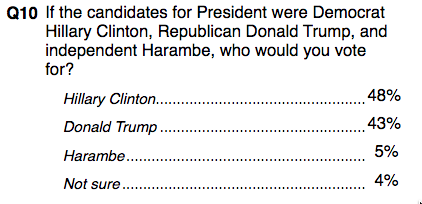
 Harambe, as you may recall, is ineligible because of age, vital status, and species.  (/ht @smurray38)
  • Nathan Yau at Flowing Data has an animation to illustrate what, say, a 60% chance of winning the US Presidential Election means — for people who don’t work with probabilities regularly, showing them as counts is helpful. Some statisticians would argue that the ‘repeated elections’ way of thinking about the probability is wrong, but that doesn’t affect its usefulness in conveying the number.
  • Update:  I wrote on how it was strange for an otherwise health 20-year-old law student to be the exemplar patient in a campaign to increase awareness about a disease primarily of the old. Stuff now has a story on who was pushing the publicity campaign.
July 28, 2016

Ice-bucket spin

The ‘ice-bucket’ challenge was intended to raise awareness of the disease ALS and to raise research funds.  Part of this money funded genetic research, and here’s how Stuff describes it, under the headline Ice bucket challenge credited with a medical breakthrough

Researchers have just announced a medical breakthrough. Thanks to the challenge they have identified a gene found to be one of the most common in people with ALS, the deadly disease that affects neurons in the brain and spinal cord.

One News was similarly enthusiastic: Researchers have discovered an important gene linked to Motor Neurone Disease, and it’s all thanks to last year’s viral Ice Bucket Challenge. The story goes on to describe this as ‘paving the way for future treatment’.

Newshub is a little better

Scientists have discovered a gene variant associated with the condition, which means therapies can be individually targeted.

They say it means they’re significantly closer to finding an effective treatment for the disease, which causes progressive muscle degeneration.

The researchers themselves were more restrained:

NEK1 has been previously described as a candidate gene for ALS. Here our findings show that NEK1 in fact constitutes a major ALS-associated gene with risk variants present in ~3% of European and European-American ALS cases.

That is, it’s not new that variants in NEK1 are associated with ALS, and what the research did was confirm this and quantify the extent of association:  about 3% of ALS cases have such a variant.

There’s nothing wrong with the research; this sort of incremental step is how science mostly works, and every bit of information helps when you’ve got a disease with no current cure and a poorly-understood cause. But it’s not a medical breakthrough even for the 3% who have these variants, and there’s no paved road to future treatment.

HealthNewsReview has a longer rant.

Alzheimer’s: breakthrough or failure

Some new headlines:

Admittedly, the shouty headline is from Daily Mirror, but the other positive ones include the BBC and New Scientist. And, yes, they are talking about the same trial of the same drug.

How can this possibly happen? And who’s right? Here’s the full press release from the conference. It starts off

A clinical trial of LMTM (TauRx Therapeutics, Ltd.) in people with mild to moderate Alzheimer’s failed to demonstrate a treatment benefit in the primary analysis of the full study population in both doses tested. However, in a pre-planned analysis of a small subgroup of the study population that received LMTM as a monotherapy, there was a statistically significant benefit on cognitive and functional outcomes, and slowing of brain atrophy.

The  trial compared two doses of LMTM to placebo, in 891 people, and didn’t find the benefit it was looking for. The press release doesn’t give the results, so we don’t know if there was modest evidence of benefit or basically nothing.

They then compared the 90-odd people who were taking LMTM and no other treatment to the 250-odd who were taking placebo. It’s that relatively small group that has the impressive results.

Reasons behind the negative headlines include

  • the regulatory/investment aspect: these results are unlikely to get the drug approved, so TauRx won’t be getting the truckfulls of money they’d be anticipating if the whole trial had been successful
  • subgroup analyses are often over-optimistic, because you mainly get to see them when they’re the sole redeeming feature of a disappointing set of results
  • in fact, getting positive results in a subgroup isn’t at all unprecedented with Alzheimer’s. Eli Lilly are betting a lot that they’ve found the right subgroup and their drug solanezumab will now be successful.
  • it’s unusual to compare people getting LMTM but nothing else with everyone on placebo (rather than people getting placebo but nothing else). You’re not guaranteed a fair comparison by randomisation that way.
  • in the other direction, it’s hard to see how other treatments (which focus on stimulating the cells that are still working) would counteract the effect of LMTM (which is trying to prevent protein tangles from forming). But biology is weird, so maybe it’s true.

TL;DR: So, would I try to get this drug if I had an AD diagnosis? It would depend on the actual results in the whole trial (which we aren’t told) and on the details of side effects (which we also aren’t told). But I’d certainly have been disappointed by these results.  And New Scientist should be ashamed of themselves.

NZ election survey: DIY data analysis

David Hood writes at Public Address about his analysis of the NZ Election Survey

The data for the 2014 New Zealand Election Survey was recently released for the general public to make of it what they will, which in the modern world of home data analysis is like parachuting a gazelle into a pride of lions.

July 27, 2016

In praise of NZ papers

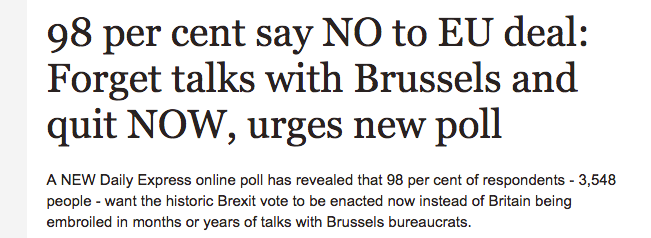
I whinge about NZ papers a lot on StatsChat, and even more about some of the UK stories they reprint. It’s good sometimes to look at some of the UK stories they don’t reprint.  From the Daily Express

express

The Brexit enthusiast and cabinet Minister John Redwood says “The poll is great news, well done to the Daily Express.” As he seems to be suggesting, you don’t get results like this just by chance — having an online bogus poll on the website of an anti-Europe newspaper is a good start.

(via Antony Unwin)

July 26, 2016

Going for the headlines

From SalonShock poll: Nate Silver’s election forecast now has Trump winning

That’s not either of his two forecasts, that’s the “now-cast”:

From Nate Silver:

But one method to measure the convention bounce is to look at FiveThirtyEight’s now-cast, our estimate of what would happen in an election held today. We don’t usually spend a lot of time writing about the now-cast because — uhh, breaking news — the election is scheduled for Nov. 8.

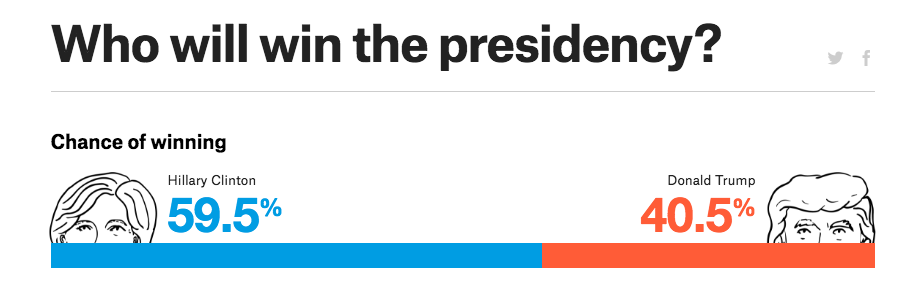
Nate Silver’s actual election forecast:

bounce

59.5% is low enough to be worrying, but it isn’t less than 40.5%

Obesity genetics

There’s actually a good story in the Herald about obesity and genetics, based on research in Samoa.  The researchers are interested in finding genetic relationships to understand the biological processes in obesity better. Polynesian peoples are relevant partly because of relatively high obesity rates, but also because each island group was settled by a relatively small number of people, leading to larger genetic differences between nations. It’s the same reason Icelanders are studied a lot by geneticists.

In this study, they found a genetic variant that is essentially non-existent in previously-studied populations (about 1 in 10,000 people) but present in almost half of their sample from Samoa.  People with the variant had, on average, a higher BMI by 1.4 kg/m2, which is quite a lot for a genetic effect — at least five times larger than the most important variant previously known, and enough to perhaps be relevant for health. On the other hand, the genetic variant explains only about 1.5% of the variation in BMI between people in the study and less than 10% of the difference in average BMI between, say, Samoa and Japan.

There’s also evidence that the genetic variant has been advantageous to the ancestors of modern Samoans.  Genetic variants that have spread more rapidly through a population tend to have brought along larger chunks of the genome from the person where they first arose.  This shows up as correlation with a larger than usual set of neighbouring variants, which was seen here.  The main reason for a genetic variant to spread more rapidly is if it is beneficial, so that’s probably the explanation.  The story given about survival on long ocean voyages would make sense, but there isn’t any specific genetic evidence for that.

An obvious question is whether this genetic variant is present in other Polynesian populations, perhaps including Māori. No-one knows yet — they haven’t looked, and this is the sort of research where consulting in advance with iwi would be important.

July 25, 2016

Briefly

  • US election opinion polls are going to get less accurate for a few weeks, history suggests.
  • The Guardian looks at Twitter abuse directed at politicians (contains abusive language)
  • PBS video about glow-worms — the StatsChat-relevant point is that glow worms are spread much more evenly and less randomly than stars
  • The famous London Tube map, now with walking times between the stations (only stations on the same line, sadly)
  • Emma Hart writes about the Broadcasting Standards Authority’s evidence-based ‘community standards’ at Public Address
  • Interesting graph of income by occupation group in the US over time (Flowing Data)
  • Why there are fewer PokemonGO locations in black neighbourhoods in the  US. (They don’t actually mean ‘why’, they mean ‘how’ — if Nintendo wanted to change this they could have.)

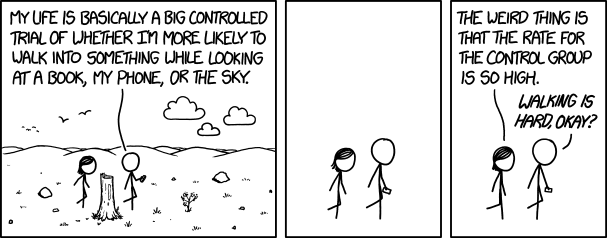
XKCD on controlled comparisons (and PokemonGO)

walking_into_things

Causation implies correlation (almost)

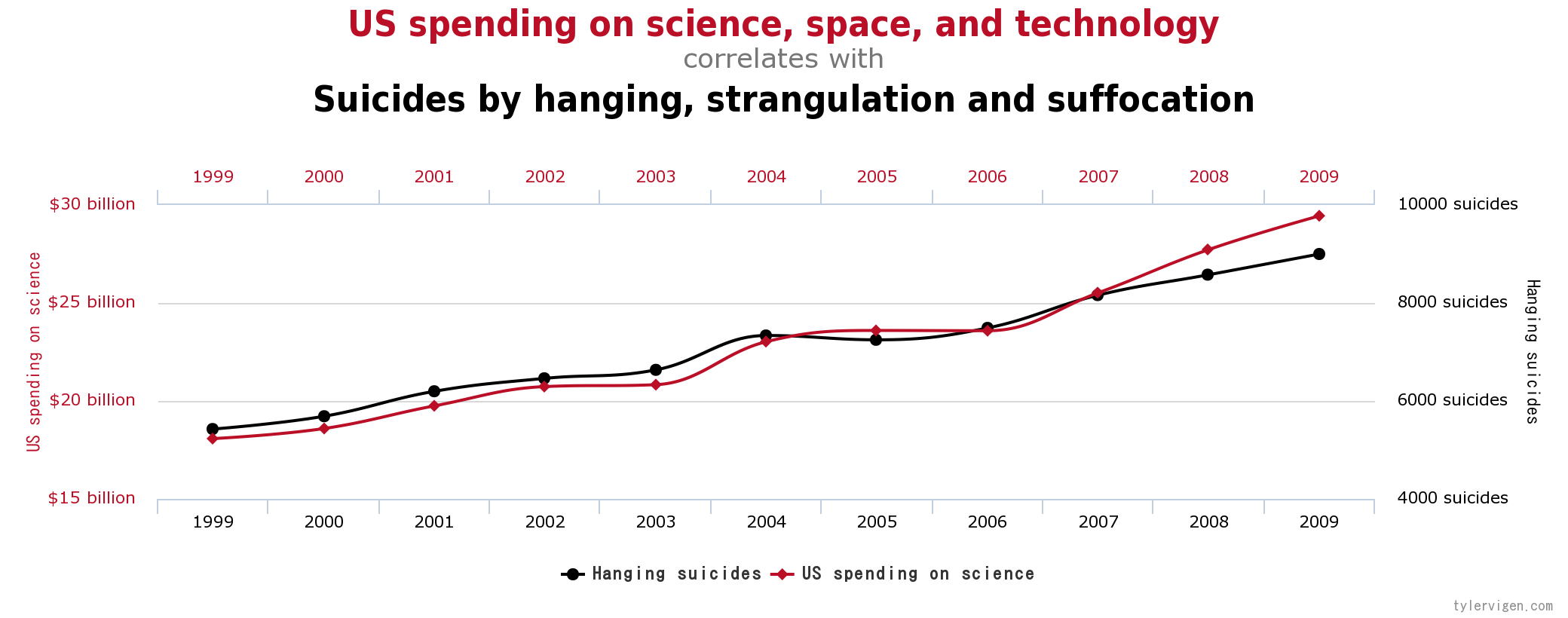
As we all know, variables can easily be correlated when they don’t really have anything to do with each other — especially time series.  There aren’t enough types of trend over time to go around, so variables have to share. tylervigen.com takes advantage of this by making graphs of entertainingly spurious correlations:

1

In the other direction, though, the correlations can be more convincing.  When you see a story claiming that WiFi and cellphones cause Alzheimer’s Disease–

Scientists are still trying to figure out just how much damage the electromagnetic signals emitted from WiFi equipment can actually do to the human brain. But by potentially preventing our brains from flushing beta-amyloid—just by being in close proximity—it’s clear these devices already have the potential for serious damage.

–it’s reassuring to remember that as WiFi has become more common, rates of dementia at a given age have gone down, not up.

It’s logically possible that dementia rates would be going down faster if not for technology, but you’d want pretty good evidence before you started believing that — starting with some sign that the people making the claims understood the basic disease trends.

July 24, 2016

Disease awareness

One News tonight had a story about venous thromboembolism (VTE) and how people don’t know about it. I couldn’t find a reference for the research, but it wouldn’t surprise me if 50% of people hadn’t heard that term — and many of those who do recognise it might associate it only with long-distance flights.

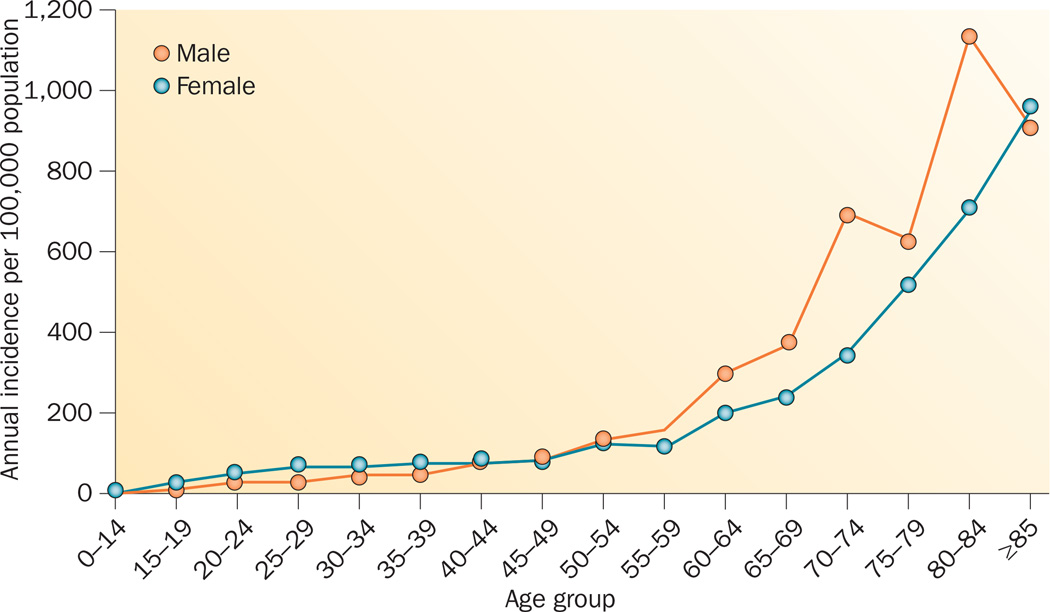
I can see people wanting to raise awareness, and the story includes a really good animation of what actually happens in a VTE. On the other hand, this is how VTE risk varies with age (source)

Nature Reviews Cardiology 12, 464 (2015). doi:10.1038/nrcardio.2015.83

On top of that, about half of VTE is due to hospitalisation, as the story went on to describe. Given those risk patterns, it’s kind of weird to have the main example in the story be a 20-year-old law student who got a pulmonary embolism without any obvious risk factors.

Disease awareness can be valuable, but it’s probably more useful when it’s modelled on people who are at high, or at least average, risk of the disease.