Dirty comparisons
RNZ: NZ among world’s worst for landfill waste per person
RNZ: New Zealand generates double the global average of rubbish, report says (also repeated here and here)
This attributes the claim to a World Bank report, but doesn’t link to it or describe in any more detail where to find it. Searching does give a World Bank report on waste. This does agree with the 2kg/person/day figure in the RNZ story, so it might be the right one. Here is a graph from it (click to embiggen)
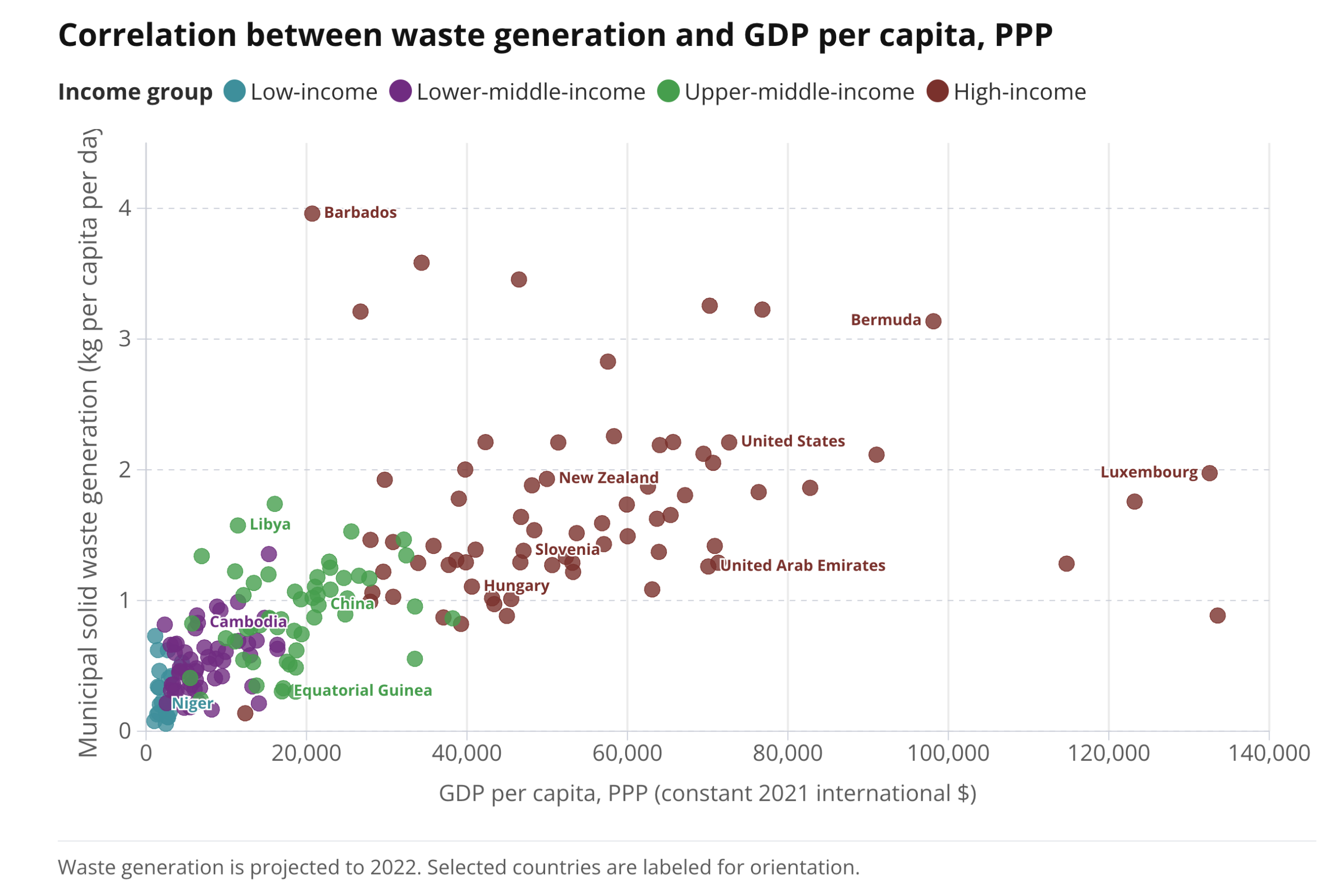
There are clearly some outlying points here. They aren’t New Zealand, which is in the middle of the pack. We have similar waste generation to other moderately rich countries.
The point here isn’t that New Zealand’s level of waste generation is ok. The point is that if you want to do something about it, you need to have a realistic understanding of what the problem actually is. If you look at an older World Bank report, described in Stuff in 2018 and visualised here, you see that New Zealand actually was called out as notably high-waste back then, and was ranked 10th in the world. We were generating 3.68 kg/person/day, so there’s been a big decrease — perhaps because of the ban on so-called single-use plastic bags. The situation then is different from the situation now, but you wouldn’t be able to tell from the media coverage.