January 2, 2018

Consider a spherical cow

Part of the point of mathematical modelling is discarding unimportant features of a problem to make it tractable. But you have to discard the right features. Here are two recent stories about mathematical optimisation.

Jason Steffen has invented a more efficient way of getting passengers on to planes — not just more efficient than what US airlines actually do, but even more efficient than letting passengers board at random. He writes

So, why isn’t this optimum method of airplane boarding being adopted by any carrier in the industry? One significant reason may be the challenge of its implementation — lining passengers up in such a rigid order. 

I’d argue that a much more important reason is you’d have to get rid of priority boarding, making frequent flyers queue with everyone else and depriving them of their chance to get the lion’s share of overhead luggage space.  A model that doesn’t account for the power of frequent flyers is solving the wrong optimisation problem to get implemented.

The same sort of issue often turns up in US discussions of partisan gerrymandering, where you’ll see mathematicians write about algorithms for perfect electorate design. These don’t solve an existing problem, because they don’t take into account who actually draws districts: it isn’t impartial mathematicians.  The main theoretical limitation on gerrymandering in the US is the power of courts to declare a partisan redistricting plan unconstitutional — but they aren’t willing to do so.  Justice Scalia wrote in 2004

    Eighteen years of judicial effort with virtually nothing to show for it justify us in revisiting the question whether the standard promised by Bandemer exists. As the following discussion reveals, no judicially discernible and manageable standards for adjudicating political gerrymandering claims have emerged. Lacking them, we must conclude that political gerrymandering claims are nonjusticiable and that Bandemer was wrongly decided.

There’s a new effort to change this, from Wisconsin. In 2015, the state was sued in federal District Court over its redistricting plan, and lost. The case focused on the ‘efficiency gap’; the difference in the number of ‘wasted’ votes between the two parties (as a percentage of all votes cast). The Supreme Court has heard an appeal in October this year and is thinking about it.

Patrick Honner wrote about the efficiency-gap proposal for Quanta, but there’s a lot more detail in a 2015 expert-witness report by Simon Jackman (PDF), an Australian political scientist at Stanford.

December 31, 2017

Sweet as

Today, Stuff’s “Well and Good” section has

There’s nothing wrong with the content, which describes some interesting dry sparkling wines one might want to try (if one liked that sort of thing enough to spend that much).  But it’s not a health story.

The very-low-sugar wines differ from ordinary ‘brut’ champagne by less than 10 grams of sugar per litre, in a drink that has more than 120 grams of alcohol per litre.   The sugar in an ordinary ‘brut’ bubbly is maybe 5% of the calorie content.

Not everything has to be about health.

Hangover cures that work

December 30, 2017

Bitter and twisted

From the New York Daily News: Study finds gin and tonic drinkers are more likely to be psychopaths, sadists

That’s not quite what the study finds. A slightly revised version is a couple of paragraphs into the story (credit for linking, but with a penalty for not mentioning it’s from 2015)

Researchers at Innsbruck University found that people who enjoy bitter flavors like the tonic water in a gin and tonic, black coffee, and dark chocolate are more prone to “Machiavellianism, psychoticism, and narcissism,” among other traits.

Here’s the list of ‘bitter’ flavoured foods they used (from)

bitter melon, cabbage, coffee, cottage cheese, grapefruit, radishes, rye bread, tea, and tonic water.

You might well think that preferences for these foods had a lot of other cultural associations on top of bitterness, and that added sugar or salt would make a big difference. And the researchers agreed, writing

Thus, due to the bitter items’ poor face validity, we refrained from formulating precise predictions regarding them. Moreover, previous research has shown that assessing taste preference is not a simple endeavor. For example, many preference measures often yield low reproducibility or are influenced by social desirability. Thus, we included this list for exploratory reasons.

They did find correlations between preferences for this list of ‘bitter’ foods and the negative personality traits (to the extent that they’re measurable on Mechanical Turk workers) — but the correlation predicted about 2% of the variability in psychopathy and sadism, and about 1% of the variability in Machiavellianism. And those are probably over-estimates given the selection bias of the news process.

There’s a more important problem, though, with the idea that ordering a gin and tonic at the bar reveals your friend’s hidden psychopathic nature. As always, the question in statistics is “compared to what”, and a G&T is not the only notably bitter beverage often consumed at the pub.

December 28, 2017

Think of a number and multiply by 365


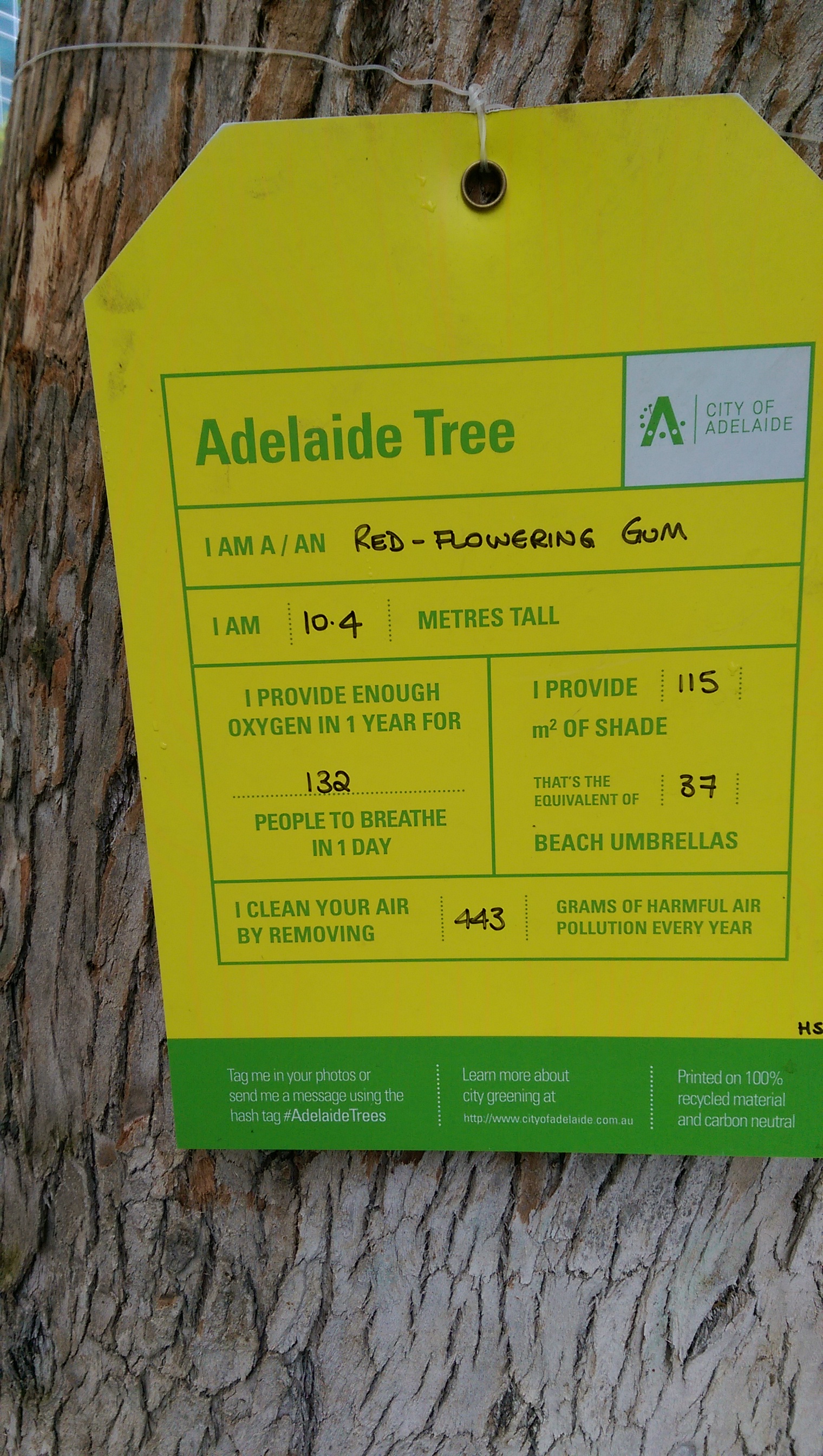
Providing enough oxygen in a year for 132 people to breathe for a day could be more simply expressed as providing about one-third of the oxygen needed by one person.

December 27, 2017

Champagne for your brain?

Q: Did you see that drinking Champagne every day can prevent dementia?

A: Didn’t that story come out a while ago?

Q: June, I think. But it’s more relevant now. And it’s going to be 38C today, so it’s not like you have anything better to do. And Champagne is seasonal at the moment.

A: Ok, ok.  I’ll look it up


A: Here’s the press release

Q: That’s dated 2013. Are you sure it’s the right one?

A: It was linked from one of the stories you gave me.

Q: And you found the research paper?

A: Yes. That’s also from 2013

Q: It’s in a journal called Antioxidants and Redox Signalling? That doesn’t really sound like a medical journal about dementia.

A: No, it doesn’t.

Q: How many people were in the study?

A: None

Q: Ok, how many mice?

A: 8 elderly rats in each of three treatment groups: control, alcohol, Champagne.

Q: And the Champagne rats were less likely to get dementia?

A: No, they did slightly better on tests involving remembering whether they’d found a food pellet in the left or right tunnel of a maze.

Q: How long were they given Champagne diet?

A: Six weeks.

Q: But it was real Champagne

A: Yes — the researchers think that because Champagne is made partly with red-wine grapes such as Pinot Noir it will contain beneficial compounds similar to those in red wine

Q: But doesn’t red wine also contain compounds similar to those in red wine?

A: Indeed. You could just drink the Pinot Noir straight.

Q: Three glasses a day seems quite a lot, especially for a rat.

A: That’s scaled by body weight: 1.78 ml/kg

Q: And do rat doses usually scale that way to humans?

A: No, if you use a more standard formula you end up with about 1.3 glasses per week as the equivalent dose in people.

Q: Not such a good headline

A: No

Q: We’d know if 1-2 glasses of red wine per week prevented dementia, wouldn’t we?

A: Yes, probably. The usual message applies: if you’re drinking champagne primarily for the health benefits, you’re doing it wrong.

Poll of the year

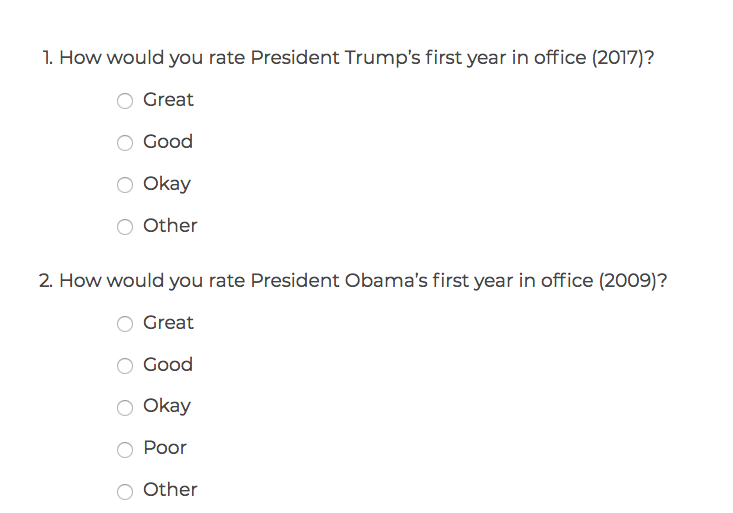
Now, in a sense this doesn’t matter. Since it’s a bogus clicky poll on a Donald Trump campaign site, it’s not there for data collection.

But that’s still an impressive piece of not trying to look as though you care.

(via @alittlestats)

December 24, 2017

Christmas puzzle

The University is closed until after the New Year, so this is the StatsChat silly season.

To start with, a quiz question:

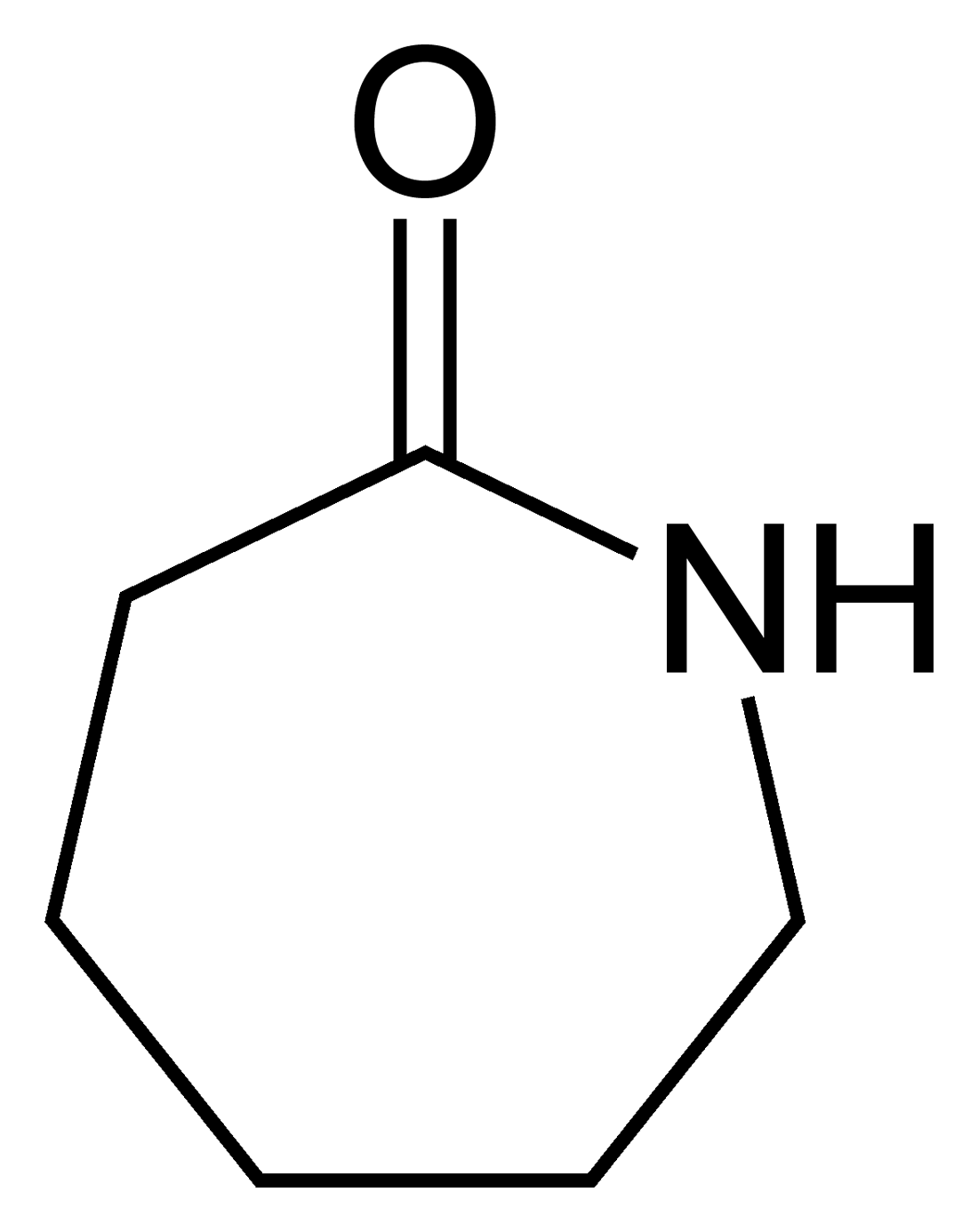
What is unusual and StatsChat-relevant about this molecule?

December 17, 2017

Doing the maths

From the New York Times, in what’s otherwise a really interesting story

The prospectors had unearthed what would come to be called the Patricia Emerald: a dazzling 12-sided crystal roughly the size of a soup can, with a weight of 632 carats — more than a quarter of a pound

If you have a rock `roughly the size of a soup can’ it’s going to weigh more than a soup can roughly the size of a soup can. A standard US can of soup has volume 10 fluid oz, and weighs over half a pound.  The Patricia Emerald is more the size of one of those small coconut cream cans — which, to be fair, is seriously impressive for an emerald.

December 15, 2017

Big Fat Misinformation

Q: Did you see there’s a diet that makes you burn energy ten times faster?

A: That … doesn’t sound very likely.

Q: It’s in the Herald

A: But it’s also in the Daily Mail.

Q: You could look up the research paper

A: <sigh>


A: Ok. Here it is.

Q: That took a while.

A: The story didn’t give the names of any of the researchers.

Q: Did the diet make people burn energy ten times faster?

A: No

Q: Mice?

A: It was people, but they didn’t burn energy ten times faster

Q: Are you sure?

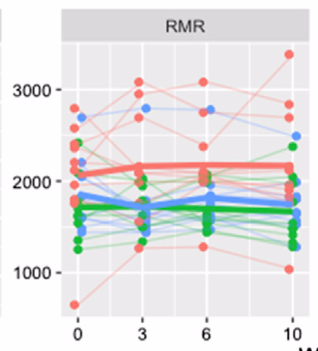
A: Here’s the graph from the research paper: RMR stands for ‘resting metabolic rate’ and the colors indicate the groups

Q: The red line is higher.  Is that the magic diet?

A: Yes.

Q: It’s not ten times higher

A: No

Q: Ten what, then?

A: The slope of the red line is ten times as steep as the slope of the other lines

Q: They all look kinda flat to me.

A: What’s ten times not a lot?

Q: Ok. Point.  The red line looks higher right from the start. The story says “They were randomly placed into three groups”

A: … “in the order they signed up for the study.”

Q: Well, you can’t randomly assign them before they sign up. Oh.  You mean they were just allocated to each group in turn.

A: Yes.

Q: Is that international best practice?

A: No.

Q: But does the diet work?

A: I don’t think the research adds much to what’s known about this question

Q: Which is?

A: Do you really think you’re going to get a simple and definitive solution to the low-carb diet controversy from a statistical blog?

Q: Ok, can I at least have some sort of sound bite?

A: Magic diet is not magic