May 29, 2014

We like to say ‘second lowest’

From the Herald

New Zealand has the highest rate of obesity in Australasia, according to a new global analysis.

The “Australasia” group has two countries in it. The proportion overweight or obese differs between those two countries by 3.3 percentage points.

There’s a good interactive visualisation from the IHME group who put the data together.

Margins of error and our new party

Attention conservation notice:  if you’re not from NZ or Germany you probably don’t understand the electoral system, and if you’re not from NZ you don’t care.

Assessing the chances of the new Internet Mana party from polls will be even harder than usual. The Internet half of the chimera will get a List seat if the party gets exactly one electorate and enough votes for two seats (about 1.7 1.2%), or if they get two electorates (eg Hone Harawira and Annette Sykes)  and enough votes for three seats (about 2.5 2%), or if they get no electorates and at least 5% of the vote. [Update: a correspondent points out that it’s more complicated. The orange man provides a nice calculator. Numbers in the rest of the post are updated]

With a poll of 1000 people, 1.2% is 12 people and 2% is 20 people.  Even if there were no other complications, the sampling uncertainty is pretty large: if the true support proportion is 0.02, a 95% prediction interval for the poll result goes from 0.9% to 2.9%, and if the true support proportion is 0.012, the interval goes from 0.6% to 1.8%.

Any single poll is almost entirely useless — for example, if the party polls 1.5% it could have enough votes for one, two, or three total seats, and national polling data won’t tell us anything useful about the relevant electorates. Aggregating polls will help reduce the sampling uncertainty, but there’s not much to aggregate for the Internet Party and it’s not clear how the amalgamation will affect Mana’s vote, so we are limited to polls starting now.

Worse, we don’t have any data on how the polls are biased (compared to the election) for this party. The Internet half will presumably have larger support among people without landline phones,  even after age, ethnicity, and location are taken into account. Historically, the cell-phone problem doesn’t seem to have caused a lot of bias in NZ opinion polls (in contrast to the US), but this may well be an extreme case. The party may also have more support from younger and less well off people, who are less likely to vote on average, making it harder to translate poll responses into election predictions.

May 28, 2014

Monty Hall problem and data

Tonight’s Mythbusters episode on Prime looked at the Monty Hall/Pick-a-Door problem, using experimental data as well as theory.

For those of you who haven’t been exposed to it, the idea is as follows:

There are three doors. Behind one is a prize. The contestant picks a door. The host then always opens one of the other doors, which he knows does not contain the prize. The contestant is given an opportunity to change their choice to the other unopened door. Should they take this choice?

The stipulation that the host always makes the offer and always opens an empty door is critical to the analysis. It was present in the original game-show problem and was explicit in Mythbusters.

A probabilistic analysis is straightforward. The chance that the prize is behind the originally-chosen door is 1/3.  It has to be somewhere. So the chance of it being behind the remaining door is 2/3.  You can do this more carefully by enumerating all possibilities, and you get the same answer.

The conclusion is surprising. Almost everyone, famously including both Marilyn vos Savant, and Paul Erdős, gets it wrong. Less impressively, so did I as an undergraduate, until I was convinced by writing a computer simulation (I didn’t need to run it; writing it was enough).  The compelling error is probably an example of the endowment effect.

All of the Mythbusters live subjects chose to keep their original choice,ruining the comparison.  The Mythbusters then ran a moderately large series of random choices where one person always switched and the other did not.  They got 38 wins out of 49 for switching and 11 for not switching. That’s a bit more extreme than you’d expect, but not unreasonably so. It gives a 95% confidence interval (analogous to the polling margin of error)  from 12% to 37%.

The Mythbusters are sometimes criticised for insufficient replication, but in this case 49 is plenty to distinguish the ‘obvious’ 50% success rate from the true 33%. It was a very nicely designed experiment.

‘Balanced’ Lotto reporting

From ChCh Press

Are you feeling lucky?

The number drawn most often in Saturday night’s Lotto is one.

The second is seven, the third is lucky 13, followed by 21, 38 and 12.

And if you are selecting a Powerball for Saturday’s draw, the record suggests two is a much better pick than seven.

The numbers are from Lotto Draw Frequency data provided by Lotto NZ for the 1406 Lottery family draws held to last Wednesday.

The Big Wednesday data shows the luckiest numbers are 30, 12, 20, 31, 28 and 16. And heads is drawn more often (232) than tails (216), based on 448 draws to last week.

In theory, selecting the numbers drawn most often would result in more prizes and avoiding the numbers drawn least would result in fewer losses. The record speaks for itself.

Of course this is utter bollocks. The record is entirely consistent with the draw being completely unpredictable, as you would also expect it to be if you’ve ever watched a Lotto draw on television and seen how they work.

This story is better than the ones we used to see, because it does go on and quote people who know what they are talking about, who point out that predicting this way isn’t going to work, and then goes on to say that many people must understand this because they do just take random picks.  On the other hand, that’s the sort of journalistic balance that gets caricatured as “Opinions differ on shape of Earth.”

In world historical terms it doesn’t really matter how these lottery stories are written, but they are missing a relatively a simple opportunity to demonstrate that a paper understands the difference between fact and fancy and thinks it matters.

NRL Predictions for Round 12

Team Ratings for Round 12

The basic method is described on my Department home page. I have made some changes to the methodology this year, including shrinking the ratings between seasons.

Here are the team ratings prior to this week’s games, along with the ratings at the start of the season.

Current Rating Rating at Season Start Difference
Roosters 8.74 12.35 -3.60
Rabbitohs 6.88 5.82 1.10
Sea Eagles 5.77 9.10 -3.30
Bulldogs 5.12 2.46 2.70
Cowboys 3.92 6.01 -2.10
Storm 2.90 7.64 -4.70
Warriors 1.33 -0.72 2.00
Broncos 1.26 -4.69 5.90
Panthers -0.09 -2.48 2.40
Knights -0.77 5.23 -6.00
Titans -2.18 1.45 -3.60
Wests Tigers -5.17 -11.26 6.10
Eels -5.91 -18.45 12.50
Raiders -6.26 -8.99 2.70
Sharks -6.52 2.32 -8.80
Dragons -10.80 -7.57 -3.20


Performance So Far

So far there have been 85 matches played, 46 of which were correctly predicted, a success rate of 54.1%.

Here are the predictions for last week’s games.

Game Date Score Prediction Correct
1 Bulldogs vs. Roosters May 23 12 – 32 5.30 FALSE
2 Titans vs. Warriors May 24 16 – 24 3.10 FALSE
3 Wests Tigers vs. Broncos May 24 14 – 16 -1.90 TRUE
4 Raiders vs. Cowboys May 25 42 – 12 -12.70 FALSE
5 Sharks vs. Rabbitohs May 26 0 – 18 -6.80 TRUE


Predictions for Round 12

Here are the predictions for Round 12. The prediction is my estimated expected points difference with a positive margin being a win to the home team, and a negative margin a win to the away team.

Game Date Winner Prediction
1 Panthers vs. Eels May 30 Panthers 10.30
2 Roosters vs. Raiders May 31 Roosters 19.50
3 Cowboys vs. Storm May 31 Cowboys 5.50
4 Warriors vs. Knights Jun 01 Warriors 6.60
5 Broncos vs. Sea Eagles Jun 01 Sea Eagles -0.00
6 Rabbitohs vs. Dragons Jun 02 Rabbitohs 22.20


Super 15 Predictions for Round 16

Team Ratings for Round 16

The basic method is described on my Department home page. I have made some changes to the methodology this year, including shrinking the ratings between seasons.

Here are the team ratings prior to this week’s games, along with the ratings at the start of the season.

Current Rating Rating at Season Start Difference
Crusaders 8.13 8.80 -0.70
Sharks 6.25 4.57 1.70
Waratahs 4.91 1.67 3.20
Bulls 3.78 4.87 -1.10
Hurricanes 3.65 -1.44 5.10
Brumbies 2.67 4.12 -1.40
Chiefs 2.50 4.38 -1.90
Stormers 1.38 4.38 -3.00
Blues -0.70 -1.92 1.20
Highlanders -1.28 -4.48 3.20
Force -2.30 -5.37 3.10
Cheetahs -4.52 0.12 -4.60
Reds -4.54 0.58 -5.10
Rebels -5.76 -6.36 0.60
Lions -7.17 -6.93 -0.20


Performance So Far

So far there have been 94 matches played, 62 of which were correctly predicted, a success rate of 66%.

Here are the predictions for last week’s games.

Game Date Score Prediction Correct
1 Blues vs. Sharks May 23 23 – 29 -2.50 TRUE
2 Rebels vs. Waratahs May 23 19 – 41 -6.30 TRUE
3 Highlanders vs. Crusaders May 24 30 – 32 -7.70 TRUE
4 Hurricanes vs. Chiefs May 24 45 – 8 -0.50 FALSE
5 Force vs. Lions May 24 29 – 19 8.70 TRUE
6 Stormers vs. Cheetahs May 24 33 – 0 5.20 TRUE
7 Bulls vs. Brumbies May 24 44 – 23 2.90 TRUE


Predictions for Round 16

Here are the predictions for Round 16. The prediction is my estimated expected points difference with a positive margin being a win to the home team, and a negative margin a win to the away team.

Game Date Winner Prediction
1 Crusaders vs. Force May 30 Crusaders 14.40
2 Reds vs. Highlanders May 30 Reds 0.70
3 Chiefs vs. Waratahs May 31 Chiefs 1.60
4 Blues vs. Hurricanes May 31 Hurricanes -1.80
5 Brumbies vs. Rebels May 31 Brumbies 10.90
6 Lions vs. Bulls May 31 Bulls -8.50
7 Sharks vs. Stormers May 31 Sharks 7.40


$5 million followup

It’s gettable, but it’s hard – that’s why it’s five million dollars.”

“The chances of picking every game correctly were astronomical”

  • NBR (paywalled)

“crystal ball gazing of such magnitude that University of Auckland statistics expert associate professor David Scott doesn’t think either will have to pay out.”

“quite hard to win  “

“someone like you [non-expert] has as much chance  because [an expert] wouldn’t pick an upset”

“An expert is less likely to win it than someone who just has a shot at it.”

“It’s only 64 games and, as I say, there’s only 20 tricky ones I reckon”


Yeah, nah.


May 27, 2014

What’s a shot at $5million worth?

In March, the US billionaire Warren Buffett offered a billion dollar prize to anyone who could predict all 63 ‘March Madness’ college basketball games. Unsurprisingly, many tried but no-one succeeded.

The New Zealand TAB are offering NZ$5 million to anyone who can predict all 64 games in the 2014 World Cup (soccer, in Rio de Janeiro (probably)). It’s free to enter. What’s it worth to an entrant, and what is the expected cost to the TAB?

If the pool games had equal probability of win/loss/draw and the finals series games were 50:50, which is the worst case for punters (well, almost), the chance of winning would be 1 in 5,227,573,613,485,916,806,405,226,496. That’s presumably also your chance of winning if you use random picks, which the TAB helpfully provides. At those odds, the value of an entry is approximately 1 ten-thousand-million-billionth of a cent (10-19 cents), which is probably less than the cost to you of

By entering this Competition, an Entrant agrees to receive marketing and promotional material from the Promoter (including electronic material).

Of course, you could do better by picking carefully. Suppose that a dozen of the pool round games were completely predictable walkovers, the remaining 34 you could get  70% right, and you could get 50% for final games. That would be doing pretty well.  In that case the value of entering is hugely better — it’s almost a twentieth of a cent.   If you can get 70% accuracy for the final games as well, the value of entering would be nearly ten cents.

But if you can predict a dozen of the games with perfect accuracy and get 70% right for the rest, you’d be much better off just betting.  I looked at an online betting site, and the smallest payoffs I could find in the pool games were 2/9 for Brazil to beat Cameroon and 2/11 for Argentina to beat Iran.  If you have a dozen pool matches where you’re 100% certain, you can make rather more than ten cents even on a minimum bet.

So, what’s this all costing the TAB? It’s almost certainly less than the cost of sending a text message to every entrant, which is part of the process. There are maybe three million people eligible to enter, and a maximum of one entry per person. Given that duplicate winners will split the prize, I can’t really believe in an expected prize cost to TAB of more than 0.01 cents per entrant, which works out at about $1200 if every adult Kiwi enters. They should be able to insure against a win and pay not much more than this. The cost of advertising campaign will dwarf the prize costs.

The real incentive to enter is that there will be five $1000 consolation prizes for the best entries when no-one wins the big prize. What matters in figuring the odds for this  is not the total number of total entries (which might be a million), but the number of seriously competitive entries. That could be as low as a few tens of thousands, giving an expected value of entry as high as twenty cents if you’re prepared to put some effort into research.


[Update: It’s actually slightly worse than this, though not importantly so. You may need to predict numbers of goals scored in order to break ties when setting up the knockout rounds.]
May 26, 2014

What’s wrong with this question?

ruitaniwha

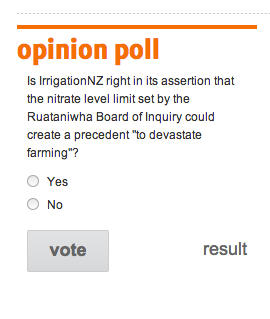
I usually don’t bother with bogus polls on news stories, but this one (via @danyl) is especially egregious. It’s not just the way the question is framed, or the glaring lack of a “How the fsck would I know?” option. There are some questions that are just not a matter of opinion. After a bit of informed public debate, and collected in a meaningful way, the national opinion on “This is the impact on farming: is it worth it?” would be relevant. But not this.

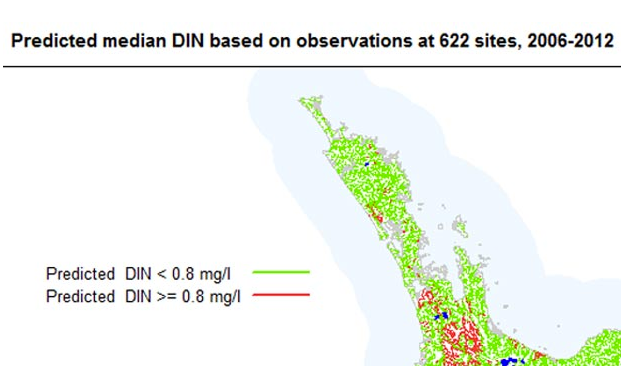
While we’re on this story, the map illustrating it is also notable. The map shows ‘Predicted median DIN’. Nowhere in the story is there any mention of DIN, let alone a definition. I suppose they figured it was a well-known abbreviation, and it’s true that if you ask Google, it immediately tells you. DIN is short for Deutsches Institut für Normung.

din


PS: yes, I know, Dissolved Inorganic Nitrogen

Stat of the Week Competition: May 24 – 30 2014

Each week, we would like to invite readers of Stats Chat to submit nominations for our Stat of the Week competition and be in with the chance to win an iTunes voucher.

Here’s how it works:

  • Anyone may add a comment on this post to nominate their Stat of the Week candidate before midday Friday May 30 2014.
  • Statistics can be bad, exemplary or fascinating.
  • The statistic must be in the NZ media during the period of May 24 – 30 2014 inclusive.
  • Quote the statistic, when and where it was published and tell us why it should be our Stat of the Week.

Next Monday at midday we’ll announce the winner of this week’s Stat of the Week competition, and start a new one.

(more…)