January 19, 2018
Briefly
- On herd immunity, from Quanta magazine “The necessary level of immunity in the population isn’t the same for every disease. For measles, a very high level of immunity needs to be maintained to prevent its transmission because the measles virus is possibly the most contagious known organism.”
- Pornhub, as is its habit, has an interesting graph on what the Hawai’i missile false alarm did to its workload (not very NSFW, but Pornhub)
- From NPR For Now, Sequencing Cancer Tumors Holds More Promise Than Proof. Even though the story is about how DNA sequencing of tumors hasn’t been a very successful strategy so far, they lead with a ‘miracle cure’ story, because that’s how the news works.
- “Bad Graphics: manipulation or laziness” from David Spiegelhalter, talking about an example from the Daily Mail.
- Also from David Spiegelhalter: there’s a recent research paper on correlations between alcohol consumption and dementia. The researchers said ““Consuming more than one UK standard unit of alcohol per day is detrimental to cognitive performance and is more pronounced in older populations”, which was widely reported in the media. This is their graph of their analysis. The minimum of the graph is at 16g/day: two UK units or 1.6 NZ units.
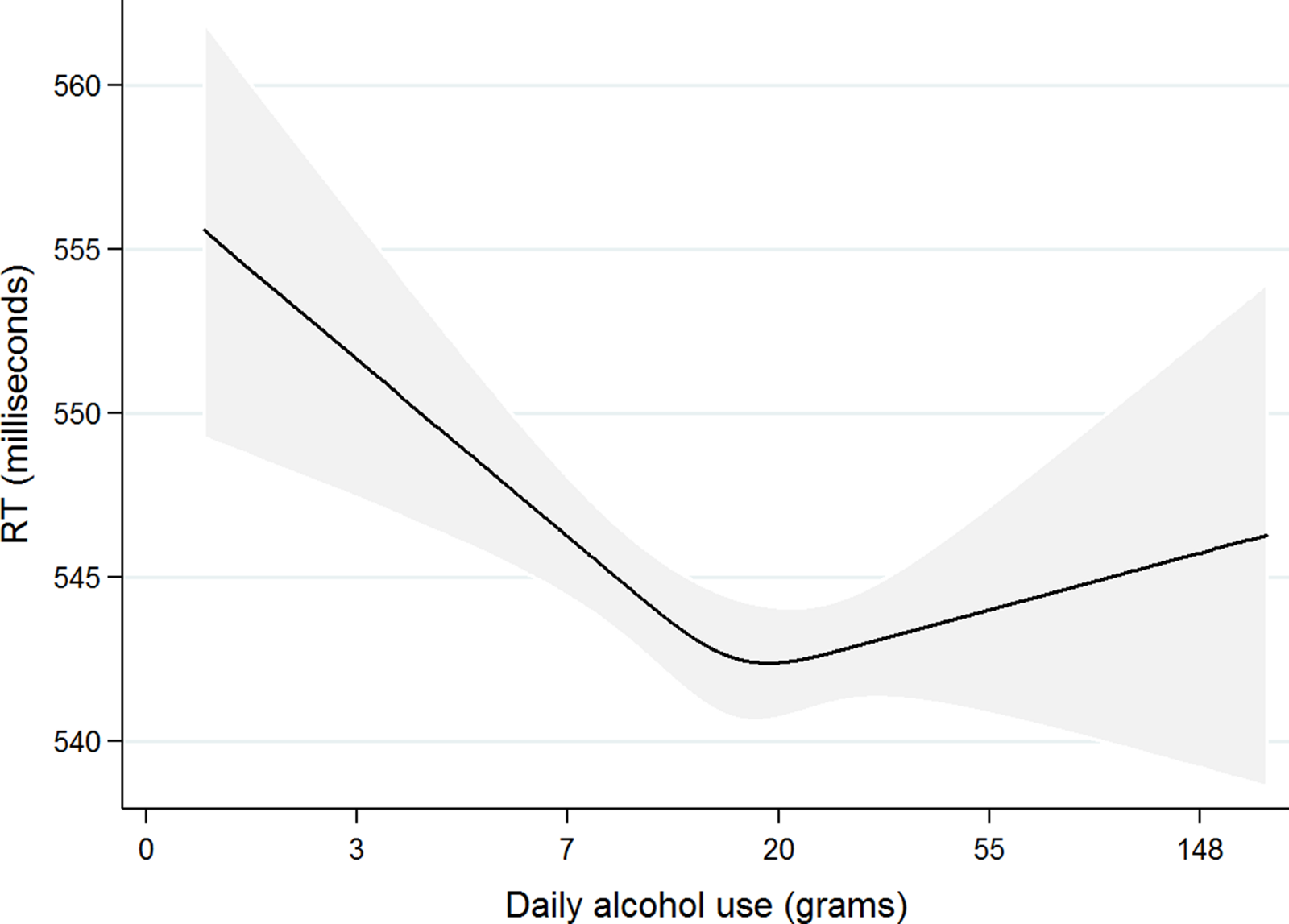
If we could trust this model, it would actually say consuming less than one unit per day is detrimental. - Via Elaine Smid, the title and abstract of a research paper