October 23, 2013

Currie Cup Predictions for the Currie Cup Final

Team Ratings for the Currie Cup Final

Here are the team ratings prior to the Currie Cup Final, along with the ratings at the start of the season. I have created a brief description of the method I use for predicting rugby games. Go to my Department home page to see this.

Here are the team ratings prior to this week’s games, along with the ratings at the start of the season.

Current Rating Rating at Season Start Difference
Western Province 5.29 4.47 0.80
Sharks 4.03 3.24 0.80
Cheetahs 0.51 -2.74 3.30
Blue Bulls -0.35 0.59 -0.90
Lions -0.67 -1.22 0.50
Griquas -10.97 -6.48 -4.50


Performance So Far

So far there have been 32 matches played, 17 of which were correctly predicted, a success rate of 53.1%.

Here are the predictions for last week’s games.

Game Date Score Prediction Correct
1 Western Province vs. Lions Oct 19 33 – 16 12.70 TRUE
2 Sharks vs. Cheetahs Oct 19 33 – 22 11.00 TRUE


Predictions for the Currie Cup Final

Here are the predictions for the Currie Cup Final. The prediction is my estimated expected points difference with a positive margin being a win to the home team, and a negative margin a win to the away team.

Game Date Winner Prediction
1 Western Province vs. Sharks Oct 26 Western Province 8.80


October 22, 2013

Historical infographics

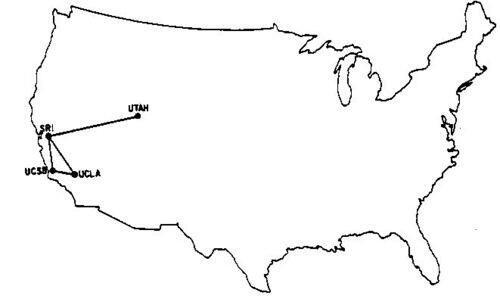
A detailed map of the entire internet, the year I was born

BXIPZhIIAAIG0gM


And now

(via Michael MacAskill)

Surprises in data

What’s wrong with this sentence? (source)

The people we meet on the other star system are humans who were collected from Earth a hundred thousand years ago, and hence are virtually identical with us.

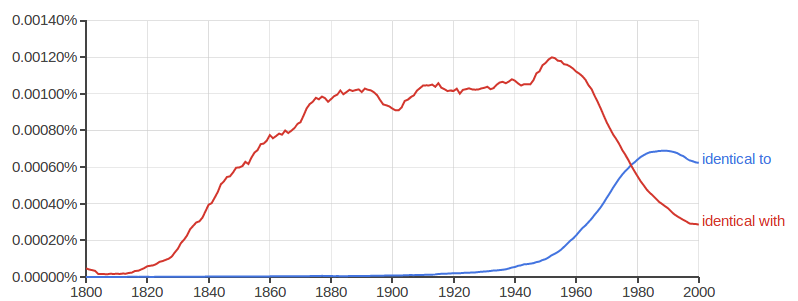
Many people would correct ‘identical with us’ to ‘identical to us’. Some people would argue that ‘identical with’ is not merely unconventional, but wrong for good reasons.

From Language Log, this is an example of linguistic change in process

identicalto_with


Until relatively recently, “identical with” was overwhelmingly the standard way to write. Now it isn’t. That’s not surprising. What’s surprising is that we mostly don’t notice the change, and often don’t notice how arbitrary these standards are.


Cookies not as addictive as cocaine

Sometimes a scientific claim is obviously unreasonable, like when a physicist tells you “No, really, the same electron goes through both slots in this barrier”. You’re all “Wut? No. Can’t be.” They show you the interference pattern. “But did you think of…?” “Yes”. “Couldn’t it be..” “No, we tried that.” “But…”  “And that.”  “Still, what about…?” “That too.” Eventually you give up and accept that the universe is weird. An electron really can go through two holes at once.

On the other hand, sometimes the claim isn’t backed up that well, like when Stuff tells us “Cookies as addictive as cocaine”. For example, while some rats were given Oreo cookies and others were given cocaine, there weren’t any rates who were offered both, so there wasn’t any direct evaluation of preference, let alone of addiction. The cookies weren’t even compared to the same control as the cocaine — cookies were compared to rice cakes, and cocaine-laced water to plain water.

There’s a more detailed take-down on the Guardian site, by an addiction researcher.

October 21, 2013

Stat of the Week Competition Winner: October 12 – 18 2013

Thank you for your nominations in last week’s Stat of the Week competition.

We’ve chosen Michael MacAskill’s nomination of the Christchurch Press article: “Luck of the Irish has sex-disease downside”.

“Irish migrant rebuild workers in Christchurch might or might not have higher rates of sexually transmitted diseases than they did last year.

This story claims that there has been an increase in Irish workers in ChCh with sexually transmitted infections. It doesn’t adjust for the large increase in the total number of Irish workers in the city over the period. No figures are available for other nationalities, so we have no context to judge whether Irish are either over or even under-represented. An absolutely unqualified and uninformed (but sadly, recently re-elected) lay Health Board member is oddly enough asked to contribute his opinion. He prefixes them with the word “Statistically…” to give them more weight. He assumes that all Irish workers in ChCh are heterosexual males, and makes several causal leaps to blame local women for passing on infections.

And why exactly are we just talking about the Irish in the first place?”

There’s also a strong reaction in the comments on that article on Stuff, including someone threatening to complain to the Press Council.

Thanks for alerting us to this article Michael, and congratulations for being our Stat of the Week winner!

Stat of the Week Competition: October 19 – 25 2013

Each week, we would like to invite readers of Stats Chat to submit nominations for our Stat of the Week competition and be in with the chance to win an iTunes voucher.

Here’s how it works:

  • Anyone may add a comment on this post to nominate their Stat of the Week candidate before midday Friday October 25 2013.
  • Statistics can be bad, exemplary or fascinating.
  • The statistic must be in the NZ media during the period of October 19 – 25 2013 inclusive.
  • Quote the statistic, when and where it was published and tell us why it should be our Stat of the Week.

Next Monday at midday we’ll announce the winner of this week’s Stat of the Week competition, and start a new one.

(more…)

October 20, 2013

Medical Research Ethics

There’s a new edition of the Declaration of Helsinki, the research ethics declaration of the World Medical Association (diffs from the previous version)

Some of the main changes

  • Clarification of the principles for research on vulnerable populations, such as developing countries: the question should be relevant to them so that the answer provides benefits to them, and there should be a fair level of other benefits.
  • Explicit recognition that risks need to be monitored during the research
  • Requiring some way for the treatment identified as best to be available to research participants after a trial
  • Adding research sponsors (eg, drug companies) to the list of those with explicit obligations to ensure publication of all results.

(via Alice Dreger and Janet Stemwedel)

Infographics old and new

  • Abraham Lincoln’s “slave map”, via the New Yorker
  • The UK Data Explorer. Interactive graphics for UK official data, by James Trimble, who is a computing science student at Glasgow University
  • GED VIZ, from the Global Economic Dynamics project in Germany.
October 19, 2013

Briefly

  • Nature, the well-known science journal, has a new ‘Nature Graphics‘ tumblr with art, infographics, and some actual graphics with information.
  • The Herald reports the WHO has listed outdoor air pollution as a leading cause of cancer. They don’t point out that air pollution is going down in most of New Zealand.
  • The Herald also has an interesting report of someone getting a deep-vein thrombosis after a long gaming session. Sitting still for long periods has been known to have this risk since WWII, when cases turned up in Britain in air-raid shelters, but the risk is small.  For long plane flights, the risk of death from a blood clot is about one in a million, but more than ten times that many will need hospital treatment.
October 18, 2013

Is the King (of beers) no longer the king?

Anecdotally, many of the New Zealanders I talk to think that a) all American beer is appallingly bad, and that b) this is all that Americans drink. In fact, the US has been leading the micro- and craft- brewing revolution for some years now, and a new survey shows that American beer drinking tastes are changing. Budweiser, the so-called King of Beers, a product of US brewing giant Anheuser Busch, appears to have been deposed by Colorado based Blue Moon Brewing Company. I am sure someone will tell me that far more Budweiser/Millers/Coors is produced than beer from Blue Moon, but hey maybe American’s are just using it to pre-cook bratwursts before grilling like I used to do.

I was a little concerned that this study might be self-selected, or industry motivated, but the information provided gives some reassurance: “Data on behalf Blowfish for Hangovers by a third party, private research firm based on a study of 5,249 Americans who drink alcohol and are over the age of 21. Margin of error for this study is 1.35% at a 95% confidence interval. Additional data on alcoholic beverage sales collected directly by the Alcoholic Epidemiolic Data System (AEDS) from States or provided by beverage industry sources.”