December 23, 2012

Christmas tree cloning

Oddstuff has a story on German research involving cloning good-looking Christmas trees.

The story shouldn’t really seem odd to Kiwis: we’ve got whole industries based on cloned trees, including vast plantations of cloned pine trees.  And even in the northern hemisphere, parts of the Christmas tree industry already use cloned trees because some popular plants are sterile hybrids that can only be propagated as clones.

I’ve occasionally thought it would be entertaining to stage a protest about cloned apples outside a supermarket, just to see how people react…

Safety rules for psychoactive drugs

In the early 1980s there was a significant advance in research on Parkinson’s Disease, when a number of young drug users showed up with a sudden onset of the disease.  Investigations showed that a synthetic opioid ‘legal high’ called MPPP was responsible; the methods used to synthesize it produced a byproduct MPTP that was metabolised into a potent neurotoxin and selectively absorbed into cells that thought they were getting dopamine.   Of course, this is a one-off problem with that specific drug, and not something that’s ever likely to happen again.

This sort of thing is why both animal and human safety testing is required before medications are approved, and it’s why medical chemists get rather upset at people who market untested compounds. However, it isn’t the main point behind the current NZ plans for testing legal highs, since none of the cannabis analogues Mr Dunne has banned using the interim laws would have failed basic toxicity tests. In fact, the safety problem with the cannabis analogues seems to be precisely that they are psychoactive, and that they are much easier to overdose on than real cannabis (they are ‘full agonists’, THC is a ‘partial agonist’ at the same receptors).

The problem with the new laws is that they are trying to reconcile inconsistent views of the level of safety needed.  Before Kronic started large-scale marketing and distribution, the cannabis analogues were in the sort of slightly dodgy market where you wouldn’t expect a great deal of safety testing, users knew this, and we had a pretty good compromise. When the drugs started being advertised and sold in dairies (and not just ones on K Rd), the implied level of safety was a lot higher, there were more overdose in young users, and their parents got, quite reasonably, upset.  After Mr Dunne grants his nihil obstat on production and sale, the implied safety level will even higher, and probably not achievable.

That’s why I think the animal testing issue is largely a distraction. If the regulations are going to be consistent with Mr Dunne’s bans over the past year or so, anything that has a high enough chance of approval to make the tests commercially feasible is likely to be pretty much a placebo (or placebo plus caffeine for party pills).   Whether the net health effect is positive or negative depends a lot on what is substituted for the previously-legal highs.  If it’s healthy exercise or meditation, we might come out ahead. If it’s alcohol, the impact is going to be negative.  Unfortunately, although I’m betting on a negative effect, I don’t see any easy way of getting back to the pre-Kronic situation.


[PS to Eric Crampton: Yes, I am indeed ignoring the benefits people get from being high. I’m pretty sure Peter Dunne is, too]

December 22, 2012

Making a list, checking it less than twice

It’s the season for lists from the year in review.  Buzzfeed has one entitled “27 Science Fictions That Became Science Facts In 2012”. Some of these are real, but some became science facts quite a while ago, others are still in the future, and some appear to be completely bogus.

Good:

  • a quadriplegic has a robot arm controlled directly by her brain.
  • Voyager I leaves the solar system

Badly headlined

  • DNA photographed for the first time. No, DNA is easy to extract and has been photographed many times. Individual chromosomes under a microscope were photographed years ago, and Crick and Watson used X-ray photographs to work out the structure.  What’s new is an electron microscope photograph of DNA where you can actually see the helix.
  • Genetically Modified Silk Is Stronger Than Steel. This is about genetically modified silkworms that produce something closer to spider silk. Spider silk is the strongest natural fibre, and has higher tensile strength than steel, weight for weight, but actually so does ordinary silkworm silk.

Still Science Fiction

  • Stem Cells Could Extend Human Life by Over 100 Years. This is actually a story about stem cells extending the life of mutant rapidly-aging mice by 50 days.  Not quite the same thing.  Stem cells extending human life is definitely still science fiction.

Probably bogus

  • Invisibility Cloak Technology Took a Huge Leap Forward. You have all seen the ‘invisibility cloak’ stories that turn out to be about bending microwaves around a small toy.  This one is different. It has a perfect camouflage cloak that even knows which things behind it you want to hide, and which ones you want to reveal. It’s almost as good as Photoshop. Um. yes. Never mind.

That still leaves 21 for you to check if you get bored over the holidays

December 21, 2012

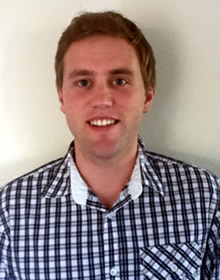
Meet Jonathan Goodman – Statistics Summer Scholarship recipient

This summer, we have a number of fantastic students who received a Department of Statistics scholarship to work on fascinating projects with our staff members. We’ll be profiling them here on Stats Chat and we’d love to hear your feedback on their projects!

Jonathan is working with Stephanie Budgett on a research project entitled ‘First-time mums – can we make a difference?’

Jonathan explains:

“I am working on an exciting and rather interesting research project. I am working with the Pelvic Floor Research Group at the Auckland Bioengineering Institute, looking at potential factors that are associated with pelvic floor disorders. This research is the first in the world to assess and measure the passive force of the pelvic floor using an elastometer,  an instrument for measuring elasticity of tissue, designed and built by the ABI at Auckland University.

“The aim of the research is to hopefully reach a point where nurses and midwives could enter relevant information into a computer programme based on a statistical model which would predict the likelihood of the expectant mother experiencing some form of pelvic floor disorder if she proceeded with a natural birth. If a high risk of pelvic floor trauma is predicted, then the medical staff and the mother would be forewarned and an alternative management of labour could be considered.”

More about Jonathan:

“I am studying for a BSc majoring in Statistics and Psychology. I am a leader in my local youth group and we are planning our summer camp. I am also involved with on-campus activities, having been elected the 2013 vice-president of the Australasian Union of Jewish Students.

“When I want to do something different I go and play with my circus friends. I can juggle knives and flaming torches, ride a unicycle, make balloon animals – and now I am learning acrobatics!”

Happy New B’ak’tun

Welcome to the 14th B’ak’tun in the Mayan Long Count calendar. That wasn’t so bad, was it?

In case anyone has any New B’ak’tun Resolutions about charities, I wanted to link to GiveWell, an organisation that tries to find evidence about the most cost-effective and transparent charities, and also provides a way to donate to these charities.

An encouraging feature is that they don’t only publish what they found about each charity, they publish a detailed review of their mistakes.

Their current top 3 charities are one that distributes anti-mosquito bed nets, one that sends cash directly to very poor people in Kenya (via a very cheap cell-phone based system), and one that treats schistosomiasis.

December 20, 2012

Glad tidings of great joy

The Herald has a story on the happiest countries in the world.  This is a sensible thing to measure, but it’s hard to know if you have got it right, or whether the differences between countries just reflect differences in responding to survey questions. At least it was from a real survey.

Another recent survey result was the US companies with the happiest employees.  Pfizer was on top of the list.  Pfizer is perhaps more notable recently for its layoffs, with the last round just this week, so the survey has been greeted with a certain bemusement in some parts of the internet.  The provenance of these data is a bit dubious:


To reveal the top happiest companies, CareerBliss analyzes thousands of independent employee-submitted reviews. 

Post a quick company review to nominate your company for next year!

and, yes, this means it’s just a self-selected bogus poll.

Proper use of denominators

The Herald, and the Ministry of Transport, are reporting rates for motor vehicle crashes and casualties, not just totals:

Statistically, Dunedin is New Zealand’s worst city for motor vehicle crashes and casualties but authorities say the numbers are dropping.

…

Last year the city recorded 364 injury crashes. Auckland had 2903, and Christchurch 715.

However, Dunedin had the highest number of crashes per 10,000 population (29), ahead of Palmerston North (24) and Napier (23).

Population is not the ideal way to standardise road crashes (especially in high-tourism areas), but it’s a lot better than not doing anything.  When we looked at crashes at intersections, back in March, it didn’t make a lot of difference whether we standardised by population, number of registered vehicles, or vehicle-miles travelled.

Meet Savannah Post – Statistics Summer Scholarship recipient

This summer, we have a number of fantastic students who received a Department of Statistics scholarship to work on fascinating projects with our staff members. We’ll be profiling them here on Stats Chat and we’d love to hear your feedback on their projects!

Savannah is working with Maxine Pfannkuch and Stephanie Budgett on a research project entitled ‘Statistics Education Research – the bootstrap method’.

Savannah explains:

Savannah Post Statistics Scholarship“I’m working on a collaborative research project looking at statistics education in New Zealand at the secondary and tertiary level. This summer the research team has been expanded to include two research assistants, myself and Kim Eccles (who is also featured on this website). I’m very grateful for the opportunity to work in such an amazing environment and am looking forward to acquiring new skills in research and data analysis over the summer.

“Overall, the project focuses on exploring the ways in which statistics students respond to the concepts taught. We are especially interested in their understanding of two new computer-intensive methods for learning about statistical inference. Over the summer, we will be analysing data obtained from pre- and post-testing as well as interviews, using the computer software package nVivo. From this, we hope to gain some kind of insight into the statistical understanding students develop as a result of the teaching they receive. In particular, we would like to identify which of the “big ideas” are well understood by students and which common misconceptions exist, so that we can improve teaching for future generations of budding statisticians.”

More about Savannah:

“I was originally interested in this project because of my own background in statistics. At school, I developed an early (misguided!) disgust for statistics and would never have taken the subject any further, had Stage 1 statistics not been a compulsory course for my degree. Having since discovered a completely unexpected passion for the subject, I’m excited to be part of a project which I hope will make statistics more accessible and enjoyable for a much wider range of students.

“I have just completed my second year of a conjoint BSc/LLB degree. Aside from my statistics major, I am also completing a second major in chemistry for the BSc component of my degree. I really enjoy the investigative, problem-solving aspect of science and would like to go on to Honours in statistics after I’ve finished my time as an undergraduate. After that, the way forward is a little less clear, but I’m 100% sure that whichever career I end up in, a background in statistics will help me to make more sense of the world around me.

“Outside university, I especially love to sing and am involved with a number of different choirs. I spend one night a week playing social indoor netball, which is a lot of fun – bouncing balls off the walls and down the court takes some time to get used to but makes the game much more interesting! I’m also a member of the Pupuke Rotaract club, which focuses on community service around Auckland. It’s also a great place to socialise with other like-minded people.

“Over the summer, I’m looking forward to doing lots of relaxing: reading, swimming, watching late-night movies, sleeping in and spending lots of time at the beach with family and friends.”
December 19, 2012

Slightly more dead

The Herald’s story  (via Medical Daily) about a report in the BMJ slightly misses the point. The lead says

A new report, published in the British Medical Journal, claims activities like having a couple of drinks, smoking, eating red meat and sitting in front of the TV can cut at least 30 minutes off a person’s life for every day that do it.

None of this is new. What’s new, and the point of the report, is the idea of quoting all these risks in terms of expected life lost, denominated in ‘microlives‘.   David Spiegelhalter, who is Professor for the Public Understanding of Risk, writes in the report:

We are bombarded by advice about the benefit and harms of our behaviours, but how do we decide what is important? I suggest a simple way of communicating the impact of a lifestyle or environmental risk factor, based on the associated daily pro rata effect on expected length of life. A daily loss or gain of 30 minutes can be termed a microlife, because 1 000 000 half hours (57 years) roughly corresponds to a lifetime of adult exposure. From recent epidemiological studies of long term habits the loss of a microlife can be associated, for example, with smoking two cigarettes, taking two extra alcoholic drinks, eating a portion of red meat, being 5 kg overweight, or watching two hours of television a day. Gains are associated with taking a statin daily (1 microlife), taking just one alcoholic drink a day (1 microlife), 20 minutes of moderate exercise daily (2 microlives), and a diet including fresh fruit and vegetables daily (4 microlives). Demographic associations can also be expressed in these units—for example, being female rather than male (4 microlives a day), being Swedish rather than Russian (21 a day for men) and living in 2010 rather than 1910 (15 a day). This form of communication allows a general, non-academic audience to make rough but fair comparisons between the sizes of chronic risks, and is based on a metaphor of “speed of ageing,” which has been effective in encouraging cessation of smoking.

There was a BBC documentary on this subject back in October (a 5-minute clip is available).

Meet Ryan Feyter – Statistics Summer Scholarship recipient

This summer, we have a number of fantastic students who received a Department of Statistics scholarship to work on fascinating projects with our staff members. We’ll be profiling them here on Stats Chat and we’d love to hear your feedback on their projects!

Ryan is working with Brendon Brewer on a research project entitled ‘Uncertainty in faint astronomical images’.

Ryan explains:

Ryan Feyter Statistics Scholarship 2012-2013“Astronomers often take images of the sky, then look for objects such as stars or galaxies in these images. It is of interest to measure the “flux” or total brightness of the objects, which is then used as input to scientific studies. However, this cannot be done accurately because the images are noisy, especially when they are of very faint distant objects such as the first galaxies in the universe.

“Two approaches for estimating flux are in common use. One is to simply add the image pixel values together and use that to estimate the total flux. A more sophisticated approach is to try to infer the underlying noise-free image of the object (using Bayesian methods), and then to calculate the flux of the noise-free image. This second approach is harder and requires more assumptions, but is likely to be more accurate.

“Our project is using simulations to investigate exactly how much more accurate the sophisticated approach is, and whether this remains true even when incorrect assumptions are used.”

More about Ryan:

“I have just finished a Bachelor of Science degree in Statistics and Maths. Next year I will be starting a Bachelor of Science (Honours) in Statistics. Having done statistics and maths has significantly improved my thinking and problem-solving abilities, which has been useful for projects like the one I’m currently involved in and (hopefully) are very desirable traits to have in the workforce.

“I like stats because it can be useful in almost any industry. Almost anything we do produces some data which will then need to be analysed. I have found stats to be the most enjoyable subject I have studied due to the great lecturers and the material having a lot of relevance to real-life problems.

“In my spare time this summer I’ll be spending some time in Christchurch with the family, seeing friends, probably doing a lot of relaxing and playing computer games!”