March 20, 2017

Stat of the Week Competition: March 18 – 24 2017

Each week, we would like to invite readers of Stats Chat to submit nominations for our Stat of the Week competition and be in with the chance to win an iTunes voucher.

Here’s how it works:

  • Anyone may add a comment on this post to nominate their Stat of the Week candidate before midday Friday March 24 2017.
  • Statistics can be bad, exemplary or fascinating.
  • The statistic must be in the NZ media during the period of March 18 – 24 2017 inclusive.
  • Quote the statistic, when and where it was published and tell us why it should be our Stat of the Week.

Next Monday at midday we’ll announce the winner of this week’s Stat of the Week competition, and start a new one.

(more…)

March 18, 2017

Briefly

  • A guy tracked all the words his son learnt in the first 20 months, and made graphs.
  • Based on survey data, Peter Beinart argues in the Atlantic “those who don’t regularly attend church are more likely to suffer from divorce, addiction, and financial distress.” Fred Clark (who does regularly attend church) has a different suggestion “It’s also entirely possible — and quite likely once you allow yourself to think about it — that all of these things make church-going more difficult and less likely.” 
  • From the archive that noted.co.nz now has online, Mark Broatch interviews Eula Bliss about her book on vaccination.
  • Apps that use your phone to monitor your health or nudge you towards better behaviour have obvious potential.  One of the first evaluations of an app baseed on Apple’s ResearchKit shows that the potential isn’t matched by actual. “only 131 participants took at least a week’s worth of surveys and a six-month milestone survey. That’s 1.7 percent”. Story at Ars Technica, research paper
  • The new newsroom.co.nz has a good story on the history and uptake of a treatment for premature babies that came from New Zealand research on sheep.
  • Mark Hanna has an interactive graphic comparing how often NZ Police use different tactical options for stopping people, by ethnicity.
  • Does it matter how long you’ve already waited for a bus? In New York, not really.
  • Nat Dudley talks about colour-blindness and accessibility of graphics.

Two cheers for genomics

PCSK9 inhibitors are one of the high-profile stories of genomics in medical research.  The gene’s function was previously unknown: it was identified as important for cholesterol metabolism by genetic studies.  People with mutations that increase the activity of the protein have high LDL cholesterol; people with mutations that destroy the activity have low LDL cholesterol. And, importantly, there’s at least one person walking around and alive and healthy with mutations breaking both her copies of the gene, so inhibiting it looked relatively safe.  It was an obvious target for drug development and a showcase for the benefits of large-scale genetic research.

Three drug companies have made injectable antibodies that block the activity of PCSK9 and dramatically lower LDL cholesterol. One dropped out last year because their drug got attacked by the patients’ immune systems.  We’re now seeing the first results of clinical trials looking at whether the LDL cholesterol reduction leads to fewer heart attacks.

From a New Zealand point of view, the results are mostly of theoretical interest. Pharmac isn’t likely to subsidise these treatments for large groups of people any time soon.  However, we do still care what the trials show, because they help answer some questions about cholesterol. The research paper is here; two good commentaries on it are here and here

Amgen’s drug, evolocumab, reduced LDL cholesterol by about two-thirds (from an average of 2.3 mmol/l to 0.78 mmol/l). The combined rate of heart attack, stroke, and death from heart disease was 20% lower; there was only a 15% reduction in the longer shopping list of bad events that the study put its money on for the primary analysis.

So, first, lowering LDL cholesterol by a different mechanism from statins has also resulted in lower heart attack rates.  That reinforces the evidence that LDL cholesterol really matters; it’s not just a marker like smoke from a fire.  Given the largely failed efforts to improve health with drugs that raise HDL cholesterol, this is good to know. Second, lowering LDL cholesterol this way seems fairly safe. There wasn’t any detectable harm (apart from the localised symptoms of the injections themselves). There could be rarer or more subtle effects, of course.

And finally, while the results are qualitatively positive, the actual scale of the benefit is a bit disappointing.  With an average 2.2 years of followup for 13784 people in the treatment group, about 200 heart attacks, strokes, or heart disease deaths were postponed or prevented.  At current US prices of $14,000 per year, that would cost over US$420 million.

So, two cheers for genomics in drug development.
March 17, 2017

Is ibuprofen killing you?

The Herald story starts off

Commonly bought over-the-counter painkillers including ibuprofen have been linked to a significant increased risk of cardiac arrest.

The research paper is here (but paywalled).

First, it’s important to remember that “significant” in this context means “detectable” rather than “important.” The risk was higher by about 30%, but cardiac arrest is fairly rare.  With ten years of complete data from Denmark (about 5.5 million people) the researchers accumulated 30,000 cardiac arrests: that’s about five cases per ten thousand people per year.

As usual, this is observational data looking at correlations; the harmful effect, if it’s real, is too small to see reliably in clinical trials.  The researchers used a clever study design where they compared use of painkillers in a cardiac-arrest patient both with the same patient at times in the past and with different patients at the same time.  Differences between people that are constant over time (like smoking) will cancel out of the analysis; differences over time that are constant between people (like season) will also cancel out.  The design doesn’t cancel out non-constant factors like starting an exercise programme that leaves your muscles and joints sore.  It’s not unreasonable that a risk difference this small could be explained by confounding factors.

There’s something more important wrong with the story, though. You might wonder how people who have cardiac arrest get asked about their painkiller use. They didn’t; the study used prescription data.  For many of the painkillers, prescription is the only source; in particular, that’s the case for diclofenac (Voltaren), where the apparent risk increase in the study was a bit larger.

Ibuprofen, however, is available over the counter in Denmark, just as it is here. It’s available in fairly small packages, and is labelled for short-term use, just as it is here. Over-the-counter sale is what the story is basically about, but the study didn’t look at over-the-counter use at all.

March 16, 2017

Don’t say we didn’t warn you

From Stuff

3/2017: “New Zealand homeowners are being told to fix their interest rates now if they want to avoid a looming increase.”

Also from Stuff, all either headline or lead:

12/2016: Mortgage holders urged to fix as US interest rates rise

7/2016: Warning interest rates may not have much further to fall

3/2014: Time to fix loan on your house

1/2014: Rush to fix home loan rates before Reserve Bank acts

9/2013: “Economists say homeowners have officially missed the boat on locking in cheap fixed mortgage rates.”

4/2011: Now’s the time to fix mortgages: Tower

8/2009: Fix your mortgage before rates rise

There are good reasons to believe today’s story, but presumably there were for the past stories, too.

March 14, 2017

Super 18 Predictions for Round 4

Team Ratings for Round 4

The basic method is described on my Department home page.

Here are the team ratings prior to this week’s games, along with the ratings at the start of the season.

Current Rating Rating at Season Start Difference
Hurricanes 16.98 13.22 3.80
Chiefs 11.28 9.75 1.50
Highlanders 8.08 9.17 -1.10
Crusaders 8.08 8.75 -0.70
Lions 6.71 7.64 -0.90
Waratahs 2.92 5.81 -2.90
Brumbies 2.89 3.83 -0.90
Stormers 2.68 1.51 1.20
Sharks 2.05 0.42 1.60
Blues 0.88 -1.07 2.00
Bulls -0.76 0.29 -1.00
Jaguares -2.83 -4.36 1.50
Cheetahs -7.01 -7.36 0.40
Force -8.10 -9.45 1.40
Reds -9.14 -10.28 1.10
Rebels -12.37 -8.17 -4.20
Kings -19.01 -19.02 0.00
Sunwolves -20.42 -17.76 -2.70


Performance So Far

So far there have been 26 matches played, 18 of which were correctly predicted, a success rate of 69.2%.
Here are the predictions for last week’s games.

Game Date Score Prediction Correct
1 Chiefs vs. Hurricanes Mar 10 26 – 18 -3.60 FALSE
2 Brumbies vs. Force Mar 10 25 – 17 15.40 TRUE
3 Sharks vs. Waratahs Mar 10 37 – 14 0.40 TRUE
4 Blues vs. Highlanders Mar 11 12 – 16 -3.70 TRUE
5 Reds vs. Crusaders Mar 11 20 – 22 -14.70 TRUE
6 Cheetahs vs. Sunwolves Mar 11 38 – 31 18.80 TRUE
7 Kings vs. Stormers Mar 11 10 – 41 -16.50 TRUE
8 Jaguares vs. Lions Mar 11 36 – 24 -7.90 FALSE


Predictions for Round 4

Here are the predictions for Round 4. The prediction is my estimated expected points difference with a positive margin being a win to the home team, and a negative margin a win to the away team.

Game Date Winner Prediction
1 Crusaders vs. Blues Mar 17 Crusaders 10.70
2 Rebels vs. Chiefs Mar 17 Chiefs -19.70
3 Bulls vs. Sunwolves Mar 17 Bulls 23.70
4 Hurricanes vs. Highlanders Mar 18 Hurricanes 12.40
5 Waratahs vs. Brumbies Mar 18 Waratahs 3.50
6 Lions vs. Reds Mar 18 Lions 19.80
7 Sharks vs. Kings Mar 18 Sharks 24.60
8 Jaguares vs. Cheetahs Mar 18 Jaguares 8.20


NRL Predictions for Round 3

Team Ratings for Round 3

The basic method is described on my Department home page.

Here are the team ratings prior to this week’s games, along with the ratings at the start of the season.

Current Rating Rating at Season Start Difference
Storm 8.88 8.49 0.40
Cowboys 7.46 6.90 0.60
Sharks 7.40 5.84 1.60
Raiders 7.04 9.94 -2.90
Panthers 5.37 6.08 -0.70
Broncos 5.15 4.36 0.80
Eels 1.27 -0.81 2.10
Roosters 0.12 -1.17 1.30
Bulldogs -1.22 -1.34 0.10
Rabbitohs -1.70 -1.82 0.10
Titans -3.77 -0.98 -2.80
Wests Tigers -4.67 -3.89 -0.80
Sea Eagles -5.52 -2.98 -2.50
Dragons -5.91 -7.74 1.80
Warriors -7.31 -6.02 -1.30
Knights -14.65 -16.94 2.30


Performance So Far

So far there have been 16 matches played, 7 of which were correctly predicted, a success rate of 43.8%.
Here are the predictions for last week’s games.

Game Date Score Prediction Correct
1 Roosters vs. Bulldogs Mar 09 28 – 24 5.00 TRUE
2 Warriors vs. Storm Mar 10 10 – 26 -11.30 TRUE
3 Broncos vs. Cowboys Mar 10 20 – 21 1.70 FALSE
4 Knights vs. Titans Mar 11 34 – 26 -10.20 FALSE
5 Sea Eagles vs. Rabbitohs Mar 11 18 – 38 3.30 FALSE
6 Raiders vs. Sharks Mar 11 16 – 42 8.30 FALSE
7 Wests Tigers vs. Panthers Mar 12 2 – 36 -1.70 TRUE
8 Dragons vs. Eels Mar 12 16 – 34 -1.00 TRUE


Predictions for Round 3

Here are the predictions for Round 3. The prediction is my estimated expected points difference with a positive margin being a win to the home team, and a negative margin a win to the away team.

Game Date Winner Prediction
1 Storm vs. Broncos Mar 16 Storm 7.20
2 Bulldogs vs. Warriors Mar 17 Bulldogs 10.10
3 Titans vs. Eels Mar 17 Eels -1.50
4 Knights vs. Rabbitohs Mar 18 Rabbitohs -9.50
5 Panthers vs. Roosters Mar 18 Panthers 8.80
6 Cowboys vs. Sea Eagles Mar 18 Cowboys 16.50
7 Raiders vs. Wests Tigers Mar 19 Raiders 15.20
8 Sharks vs. Dragons Mar 19 Sharks 16.80


March 13, 2017

But, fear itself

new research paper from Alastair Woodward and co-workers at the University of Auckland looks at the the risks of cycling in New Zealand. Jamie Morton at the Herald has written about it.  Basically, cycling isn’t as dangerous as you probably thought: the risk of an injury severe enough to report to ACC or to go to the emergency department is about one incident per 10,000 half-hour trips.  Or, for me, about once in 25-30 years.

There are two caveats for this as a pro-cycling message.  First, there’s some selection bias: the people who currently cycle are more likely to have safe routes available than those who currently don’t cycle — bike paths really work.  So if more people started cycling with the current infrastructure the ‘safety in numbers’ effect would be reduced by the increased use of dangerous roads.

Second,  it isn’t just actual injury that’s a problem.  The research paper talks about the social context of risk perception, and how the fact that cycling is regarded as weird makes the risks seem higher, which is true and an important factor. But. One morning recently, I stopped at the traffic lights coming off Grafton Bridge, and the bus behind me didn’t.  I didn’t come that close to being hit; It’s still not a fun way to start the day.  Russell Brown, who can actually write, covers this aspect better than I can.  He concludes

Cycling is much safer than people think. But until things change, fear of cycling will keep many reasonable people off the roads.

Stat of the Week Competition: March 11 – 17 2017

Each week, we would like to invite readers of Stats Chat to submit nominations for our Stat of the Week competition and be in with the chance to win an iTunes voucher.

Here’s how it works:

  • Anyone may add a comment on this post to nominate their Stat of the Week candidate before midday Friday March 17 2017.
  • Statistics can be bad, exemplary or fascinating.
  • The statistic must be in the NZ media during the period of March 11 – 17 2017 inclusive.
  • Quote the statistic, when and where it was published and tell us why it should be our Stat of the Week.

Next Monday at midday we’ll announce the winner of this week’s Stat of the Week competition, and start a new one.

(more…)

March 12, 2017

Highchart of the week

C6mMjf5U8AEC794

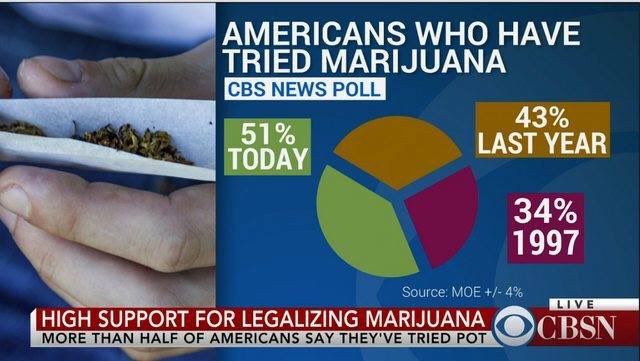
It’s not a piechart, because the wedges don’t add up to anything, which is the only possible justification for a pie chart.  On the other hand, unlike the pizzachart it is trying to display numerical data.

Also, “51% of Americans have tried marijuana today” is presumably not the intended reading, but the graphic doesn’t make that as clear as it might.

And the source for the data isn’t a guy named Moe. That’s an abbreviation for Margin of Error.  Google suggests the source is a CBS News Poll (PDF report), but that’s from last year.

(via @seanjtaylor)