November 27, 2013

How statistics can help cure cancer

Well, one of the ways.

Professor Terry Speed, an Australian statistician and geneticist, who gave public lectures in New Zealand this year as the Royal Society of New Zealand’s Distinguished Speaker, recently won the (Australian) Prime Minister’s Science Prize.

BBC News Magazine has an interview with him.

November 26, 2013

Should recreational genotyping be illegal?

The US Food and Drug Administration has sent a letter to 23andme, one of the companies that will genotype you and provide lots of information from the sample, telling them to stop. It’s a tricky situation.

This product is a device within the meaning of section 201(h) of the FD&C Act, 21 U.S.C. 321(h), because it is intended for use in the diagnosis of disease or other conditions or in the cure, mitigation, treatment, or prevention of disease, or is intended to affect the structure or function of the body. For example, your company’s website at www.23andme.com/health  (most recently viewed on November 6, 2013) markets the PGS for providing “health reports on 254 diseases and conditions,” including categories such as “carrier status,” “health risks,” and “drug response,” and specifically as a “first step in prevention” that enables users to “take steps toward mitigating serious diseases” such as diabetes, coronary heart disease, and breast cancer. Most of the intended uses for PGS listed on your website, a list that has grown over time, are medical device uses under section 201(h) of the FD&C Act. Most of these uses have not been classified and thus require premarket approval or de novo classification, as FDA has explained to you on numerous occasions.

On the one hand, I can’t see any valid social interest in stopping people from knowing their genotypes if they want to. On the other hand, the FDA has a point about marketing.

They raise two isssues.  The first is that 23andme make lots of (fairly weakly supported) claims about the usefulness of the results in disease prevention. The second is that some of the genotype information is actually clinically relevant and that they have not demonstrated sufficient accuracy in their results. The first issue is essentially a misleading advertising problem; the second is a quality assurance problem.

There are two things that can go wrong with the clinically useful results. The first is simple error: the genotype assay could give the wrong result, or you could be given results from someone else’s sample. This should be low probability, but it’s important to know how low — 1 in a 1000 would definitely be too high.

The second issue is interpretation. Suppose you have a lot of family members with breast cancer, and you suspect a BRCA1 mutation is responsible. You might be relieved if you test negative, and think your risk isn’t especially high, but that’s only a reliable conclusion if your family’s cancer risk was actually due to a BRCA1 mutation, not to some other genetic risk factor.


Update: I should probably note that 23andme could fix what I think are the actual problems, but this wouldn’t necessarily satisify the FDA.  The FDA aren’t currently being unreasonable oppressive Luddite statist bureaucrats, but they’re probably happy to be to if that’s the option on offer.
Briefly

  • UK government “Behavioural Insights Team” wins a government innovation award for using randomisation to test more effective tax reminder letters.
  • David Spiegelhalter is Unhappy with the UK Press Complaints Commission
  • ‘Crowdsourcing‘ gives fast, detailed interpretation of satellite images from Philippines, to provide information about typhoon damage.
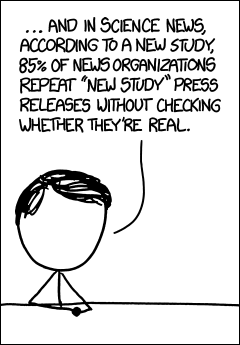
  • XKCD

(not that bloggers are necessarily any better)

November 25, 2013

–ing Twitter map

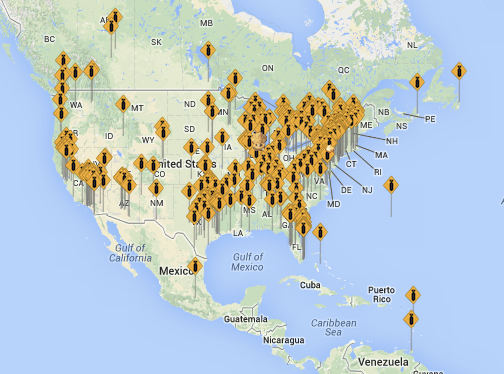
Showing what can be done straightforwardly with online data, the site Fbomb.co (possibly NSFW) is a live map of tweets containing what the Broadcasting Standards Authority tells us is the 8th most unacceptable word for NZ.  Surprisingly, it was written by a Canadian.

fbomb


“Millions of Kiwis are bombarding blacklisted child-sex-abuse sites”

Spotted this when reading Stuff’s homepage on my phone over the weekend:

stuff-screenshot

This is an obvious case where rewording a statistic makes it incorrect. When you read the full article, it’s a lot clearer:

“The Department of Internal Affairs has already blocked 34 million attempts within New Zealand to access at least one of 582 child sex abuse sites blocked by government filters since 2010.

And the number is rising, with roughly a million requests a month within New Zealand being blocked in the first half of this year.

However, while the stream of blocked requests was huge, the actual number of people consuming child sex abuse material in New Zealand was small and most of them were being caught, he said.”

According to Statistics New Zealand, 2.8 million New Zealanders were connected to the internet in 2012.

Update: David Farrar and Whale Oil blogged about this too and the headline has since been changed.

Stat of the Week Competition: November 23 – 29 2013

Each week, we would like to invite readers of Stats Chat to submit nominations for our Stat of the Week competition and be in with the chance to win an iTunes voucher.

Here’s how it works:

  • Anyone may add a comment on this post to nominate their Stat of the Week candidate before midday Friday November 29 2013.
  • Statistics can be bad, exemplary or fascinating.
  • The statistic must be in the NZ media during the period of November 23 – 29 2013 inclusive.
  • Quote the statistic, when and where it was published and tell us why it should be our Stat of the Week.

Next Monday at midday we’ll announce the winner of this week’s Stat of the Week competition, and start a new one.

(more…)

November 24, 2013

Measuring the right variable

superbowl


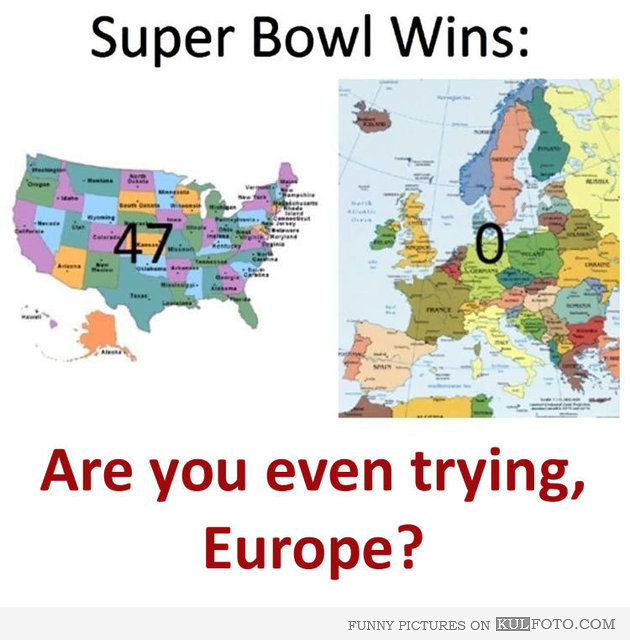
And, of course, New Zealand won the Rugby world cup, NZ or Australia will win the League world cup next weekend, and NZ was the only undefeated team in the last soccer World Cup, so Europe’s overall football credentials seem to be on shaky ground.  At least if you set up the comparison very, very carefully.

Generalisations of this approach to unsupported nutritional advertisting, surrogate outcomes in clinical trials, ranking of universities, and the claim that people with incomes below $110,000 collective pay no net income tax provide a lot of the work  for StatsChat.

(via Ben Atkinson on Twitter. I can’t identify the original source, but this version has the best punctuation.)


Blood alcohol change report

The detailed Ministry of Transport paper on changing the legal blood alcohol limit is now available.  There’s a story in Stuff, which is, if anything, unduly critical (an interesting change). It doesn’t mention the cost-benefit analysis, and implies a fines grab

Transport officials calculate nearly 20,000 people will be caught by the lower drink-driving limit – earning the Government $5 million extra in fines. 

which is a bit misleading since the report (paragraph 93) actually estimates a net increase in costs to the justice system of about $2 million in the first year and about half a million in subsequent years, ie, the fines don’t cover the costs of enforcing the change.

Basically, whether the change is a benefit or not depends on how much inconvenience and risk is caused to the average driver, the only major component that isn’t taken into account in the calculations.  If this is worth only 50c/month or so, the policy makes sense. If it’s worth a few dollars a month, not.

On the other hand, the policy is popular, and since most people should have a reasonable appreciation for how the change will affect them personally, that’s a more persuasive argument than it would ordinarily be.

November 23, 2013

Official statistics

Government statistics of an unusual kind, from CNTV, via Blood & Treasure

They’re local officials from remote Qingshuihe County in Xinjiang Uyghur Autonomous Region who don’t have time to even blink as they each count about 10,000 sheep a day. They’re here to make sure there’s never gridlock on the sheep highway through the river valley and the pastures aren’t grazed bald.


November 22, 2013

Briefly