December 13, 2012

Meet Glenn Thomas – Statistics Summer Scholarship recipient

This summer, we have a number of fantastic students who received a Department of Statistics scholarship to work on fascinating projects with our staff members. We’ll be profiling them here on Stats Chat and we’d love to hear your feedback on their projects!

Glenn Thomas is working with Alan Lee, Ilze Ziedins and Geoff Pritchard on a research project entitled ‘Statistical modelling of telecommunications sector challenges.’

Glenn Thomas Statistics Scholarship Recipient 2012-2013 Glenn explains:

“My project is unique as it is not a traditional project. Instead, I’m doing an internship at Harmonic, a company that provides custom business analytics and software tools to businesses, partnering with various universities including The University of Auckland. Harmonic provides solutions to companies primarily in the telecommunications, energy, and agriculture industries. In particular, I am working on projects in the telecommunications industry and I am also exploring how to deal with big data in R.

“One of the projects I have been working on is an asset life-cycle solution for Telecom New Zealand. The PTSN (Public Switched Telephone Network) is a fundamental asset for Telecom, and Harmonic’s asset-management analytics ensures it runs efficiently by providing monthly information updates to support spares management, failure analysis, disaster recovery and life-cycle planning. My role has been to improve the speed of some of the processes used in the analysis by optimising existing R code and developing custom functions.

“Another project I have been working on in the same industry is SNA (social network analysis), which is the analysis of social networks to deliver customer insight. One of the challenges I am facing is dealing with the large amount of data. Harmonic uses R to deliver statistical solutions, but one of the difficulties in R is working with very large datasets. I’ve been looking into various packages and methods of handling big data in R, and applying it to social network analysis.”

More about Glenn:

“I’ve just completed my third year of a conjoint degree in commerce and science. I know it sounds like an odd combination at first, but I have found the subjects to be quite complementary. My commerce major is finance, and my science majors are statistics and applied mathematics. I chose these subjects initially since I was good at them and enjoyed them at school. But more recently, I have particularly enjoyed the problem-solving side of statistics. That’s what I love about statistics; everything you learn is applicable to solving real-world problems.

“Outside of study, I enjoy getting outdoors and doing some hiking and camping. I recently walked the Hillary Trail, a 70km hike in the WaitakereRanges. I also enjoy water-skiing during the summer. I enjoy investigating the latest technology and, of course, spending time with my family and friends.”
Sure beats paying for your ads

Back in August, we commented on a bogus survey run by a sex toy store, which Stuff thought was news.

Now, three months later, the store has put out another press release(probably NSFW) from the same survey and this time we have two different stories in Stuff and even the Herald thinks it’s news. At least the Otago Daily Times didn’t fall for it.

Again we have figures quoted to a tenth of a percentage point from small subgroups of 1500 respondents (gays, people from Gisborne, 55-59 year olds), which would be meaningless even if this was a real survey.

Sigh.


December 12, 2012

Meet Huan Lin – Statistics Summer Scholarship recipient

This summer, we have a number of fantastic students who received a Department of Statistics scholarship to work on fascinating projects with our staff members. We’ll be profiling them here on Stats Chat and we’d love to hear your feedback on their projects!

Huan Lin is working with Chris Triggs and Pat Riddle (Computer Science) on a research project entitled ‘How many clusters are there, really?’

Huan Lin Statistics Scholarship Recipient 2012-2013 Huan explains:

“Initially, I’m working with two data sets with known properties to compare and contrast distance metrics and clustering algorithms both directly and in presence of noise.

“After this I will work with data sets of mixtures of categorical, binary and continuous variables where there are no predefined clusters. Then, I will investigate clustering algorithms in R and Weka to compare and contrast results. I will be writing R functions to generate datasets with known properties that can be applied to a variety of scenarios.

“At the end of the project, I am expected to become a confident R programmer to write R functions effectively and efficiently.”

More about Huan:

“I am currently in my final year of a BA and BCom conjoint degree, majoring in statistics and accounting. I enjoy learning and exploring statistics because it is a useful tool for us to better understand the world we live in. In addition, statistics provides me with many practical skills that are transferable in a variety of fields, which would be my competitive edge in the workforce.

I also enjoy playful Zumba classes for their music and rhythm. Over the summer, I also plan to study a bit of philosophy and, of course, have some time off to spend with my family and friends.”

December 11, 2012

Meet Kimberley Eccles – Statistics Summer Scholarship recipient

This summer, we have a number of fantastic students who received a Department of Statistics scholarship to work on fascinating projects with our staff members. We’ll be profiling them here on Stats Chat and we’d love to hear your feedback on their projects!

Kimberley Eccles is working with Maxine Pfannkuch and Stephanie Budgett on statistics education research.

Kimberley Eccles - Statistics Scholarship Recipient 2012-2013 Kimberley explains:  

“This summer I am working on a statistics education research project. The researchers wish to introduce some new ideas into the statistics curriculum to aid students’ understanding of some of the big ideas of statistics. Matched pre- and post-tests have been conducted to gauge levels of understanding before and after the concepts are taught.

“Another summer scholarship student and I have been given the task of reading through the test answers to ascertain and report on the level of understanding displayed. We are also identifying and reporting on common misconceptions amongst the students, so that these can be addressed and corrected in future developments of the curriculum.

“We will also be analysing interviews conducted with students using nVivo. These provide a greater ability to investigate the reasoning behind answers that students give to questions, giving a much clearer picture of which ideas are not being properly understood.

“Overall, the project is providing us with an excellent exposure to qualitative data in a way not frequently encountered by students of statistics.”

More about Kimberley:

“I am studying a conjoint degree in law and arts, with a major in statistics. This is usually considered an unusual combination – particularly given that I have no desire to practice law, and intend to teach high-school maths when I graduate.

“I am particularly interested in statistics education because I believe that all too often students are turned off statistics (and math) because of the way that these subjects are taught in school. I see this as quite a tragedy, as the analysis and critical thinking that the subjects ought to teach are extremely important for development and engagement in society.

“More relevantly to my law degree, I have a developing interest in mediation, and alongside my research project I am also training (as a reserve) for an international mediation competition. I hope to combine my interests in education and mediation at some point in the future.”

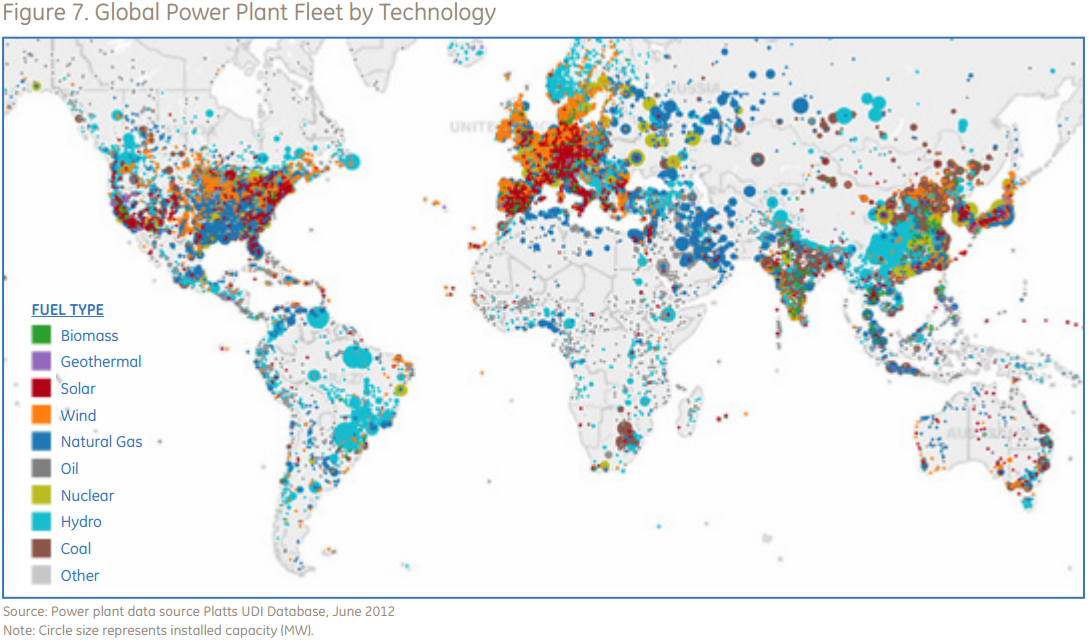
(Almost) all the world’s powerplants

From GE, via Ezra Klein’s blog at the Washington Post, this is supposedly a map of all the powerplants in the world, by size and type.

It looks as though they are missing a few.

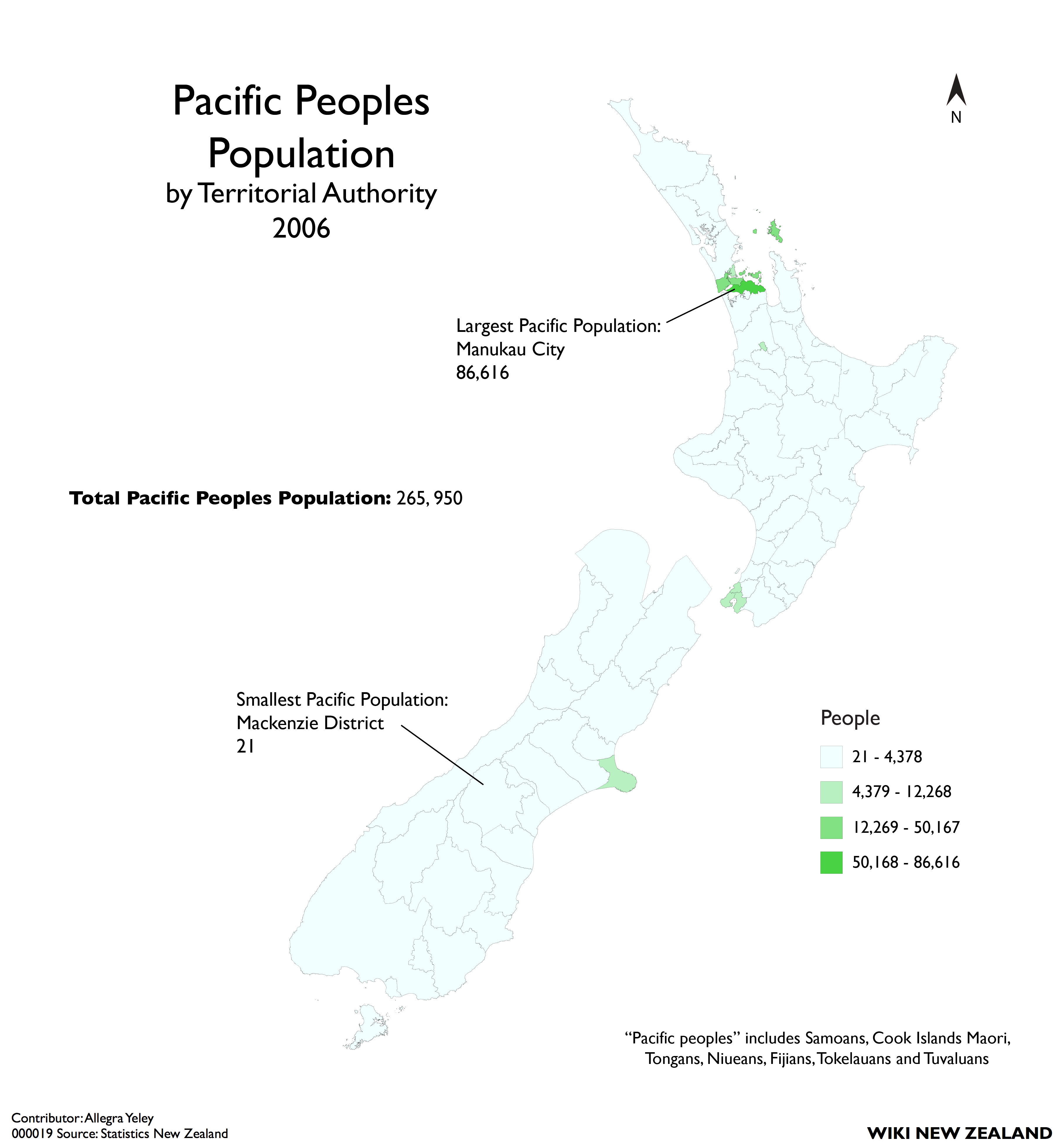
NZ data/graphics site

Wiki New Zealand bills itself as “A collaborative website making data about New Zealand accessible for everyone.”

They have lots of graphics of comparative data on New Zealand, with comparisons within the country, over time, and compared to other countries.

Two quibbles: it would be nice if the data source links gave a bit more information on how to find the data than just, eg, pointing to StatsNZ Infoshare.  Also, the thematic maps are currently all of total population counts, without any denominators.

December 10, 2012

[Video] Nate Silver talks about his new book: The Signal and the Noise

Nate Silver joins Google’s Chief Economist Hal Varian to talk about his new book “The Signal and the Noise: Why So Many Predictions Fail-but Some Don’t” and answer Googler questions.

Won’t somebody think of the children

The Herald warns us

More than four in ten UK parents say that their children have been exposed to internet porn, an official survey reveals.

In the fifth paragraph we find

The Daily Mail is campaigning for an automatic block on online porn to protect children

which should make any reader sceptical about the numbers.  This is a scare story from a foreign source notorious for its creative use of numbers and its obsession with sex, and a story where they actually admit they are lobbying. It’s bad enough getting science stories from the Daily Mail; this sort of thing really suggests a news shortage.

We don’t get told what actual questions were asked, how the sample was gathered, or any of the other basic survey details.  More importantly, we don’t even get told anything about the age range of the children, which makes a big difference in this case.  We do learn

Almost a third say their sons or daughters have received sexually explicit emails or texts and a quarter say they have been bullied online or on their phones.

Neither of these issues would be affected by the proposed internet filtering, and both are very different from internet porn in that they are almost exclusively between kids who know each other in real life.

Perhaps the journalists are too young to know that porn existed before the Internet, and teenagers were occasionally exposed to it. You can get a more useful perspective from danah boyd and from a report from Harvard’s cyberlaw clinic that contains actual research.


Briefly

I’ve been away or busy for a couple of weeks, so here are some collected links on statistics, graphics, the media, and risk

Stat of the Week Winner: December 1-7 2012

Thanks for your nominations last week in our Stat of the Week competition. We’ve selected Daniel Croft’s nomination of fascinating text message statistics on the advent of 20 years of text messaging:

“Wednesday was the 20 year anniversary of the first text message to have been sent, and so in response both Telecom and Vodafone have released some surprising information.

“Vodafone users sent 7.3 billion texts last year while Telecom was just under 7 billion. Thats 14,000,000,000 plus texts a year. Thats 38,000,000 a day spread between a population of 4,400,000… 8 texts per person a day. Or 2920 texts per person a year.

“A statistic that I would love to hear on this would be just how many of those 14 billion texts are just ‘LOL’.”

(A reminder that in our competition fine print, we state that we will not award Stat of the Week for a statistic coming from anyone at the University of Auckland outside the Statistics department. You can still nominate and discuss them, but the nomination won’t be eligible for the prize.)