August 13, 2013

Some more graphics links

  • Subtleties of Color (parts 1, 2, 3) on choosing colour palettes for different types of graphic
  • Dear NASA, No more rainbow color scales, please.
  • The Colour Oracle runs a colour filter on your whole screen to show the impact of the three sorts of dichromatic colour vision. Now it’s easy to avoid graphs that are invisible to some of your audience.
  • “Standards of statistical presentation”, originally published in 1966 by the US Army, and containing a lot of what StatsChat covers.  This isn’t cutting edge stuff, people.
August 12, 2013

Shocked (shocked!) by rate increases.

Nathaniel Wilson nominates a Stat of the Week that I’d noticed this morning but hadn’t had time to write up.

The Herald story begins

Aucklanders’ rates bills have arrived in letterboxes and the figures have come as a shock to some homeowers who have seen rises of 10 per cent – despite the council promising an average increase of 2.9 per cent.

Obviously there’s nothing inconsistent about the average being 2.9% and the maximum being 10%.  NZ’s average income is about $48000, but I take home somewhat more than that, and the CEO of Fonterra makes a whole lot more, and he may well not be the maximum. The average and the maximum are different. That’s not a shock.

The other point, that our nominator doesn’t make, is that rate increases are capped at 10%, and that all the people who hit the cap last year already knew that they would be seeing an increase this year, and roughly how much it would be. I know this because I live in Onehunga, where property values have gone up quite a lot, and I’m one of the people with a large rate increase. Since I read the rates notice I received last year I’m not at all shocked. I don’t have to say whether I’m happy or not, but it certainly wasn’t a surprise.


Stat of the Week Competition: August 10 – 16 2013

Each week, we would like to invite readers of Stats Chat to submit nominations for our Stat of the Week competition and be in with the chance to win an iTunes voucher.

Here’s how it works:

  • Anyone may add a comment on this post to nominate their Stat of the Week candidate before midday Friday August 16 2013.
  • Statistics can be bad, exemplary or fascinating.
  • The statistic must be in the NZ media during the period of August 10 – 16 2013 inclusive.
  • Quote the statistic, when and where it was published and tell us why it should be our Stat of the Week.

Next Monday at midday we’ll announce the winner of this week’s Stat of the Week competition, and start a new one.

(more…)

August 11, 2013

Chilean census problems

A neat bit of snark from the New York Times

“I humbly apologize to Chileans for those mistakes,” Mr. Piñera said in a statement Thursday. “When I was informed of these errors, I felt as upset and outraged as millions of Chileans throughout the country.”

It is not clear, however, how many millions of Chileans there are.

Last year, the Chilean census went from a one-day event run by volunteers to a much more ambitious operation taking months, but missing a lot more people — the census review commission (PDF, Spanish)estimates that more than 9% were missed. Worse, based on the projections from other data, the proportion of people missed seems to have varied by age and gender (and so presumably by other factors as well).  The review commission recommended using the data as little as possible, and trying to run a new census in 2015 for a subset of the information. For the next full census, in 2022, they recommended using adminstrative records, online forms, and other approaches to reduce the need to visit every household in person.

The commission also had fairly strong recommendations about the national statistical office

se estima indispensable que el INE fortalezca sus competencias, recursos, atribuciones y niveles de autonomía para que se convierta en una oficina de estadísticas de excelencia, propia del nivel de desarrollo que ha logrado el país. también se requiere que sea una institución abierta al escrutinio público, disponible para la participación de otras instancias públicas y privadas en las actividades que les competan, y que las estadísticas producidas se transformen en bienes públicos (las bases de datos y documentación asociada estén disponibles a todo público sin cargos financieros y en forma expedita, bajo los resguardos de confidencialidad necesarios).

or in English, that they improve their skills, resources, and competencies; become more transparent and independent; and make results publicly available for free in a useful format.

This is probably worse than the Canadian census debacle, though at least this one wasn’t deliberate. 

(via Luis Apiolaza)

Advances in non-representative sampling

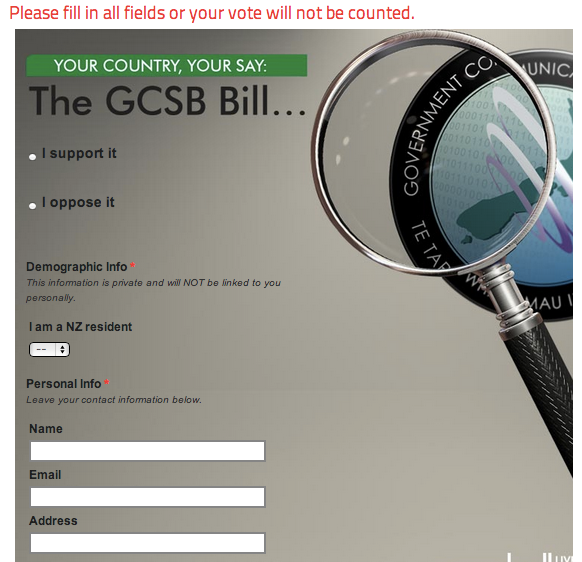
My attention has been drawn (by Joseph Simpson, on Twitter) to the Campbell Live online poll on the GCBSB vote.  These polls are fairly bogus anyway, being collected from self-selected viewers or readers, but in this case there’s an added twist.

In red at the top “Please fill in all fields or your vote will not be counted.”  The fields include name, email, and address.  Wouldn’t you expect that people unhappy with the prospect of increased (legal) surveillance of New Zealanders might be less willing to give all their personal details with their vote?

vote
To be fair, the form says that the personal information is private and won’t be linked to you personally.  If we assume don’t mean this, but actually mean that the personal information won’t be linked to the votes, and that TV3 is able to ensure this, there’s no problem.

The wine when it is red

An NZ wine maker has produced wines with high levels of the chemical resveratrol. In Stuff’s story

“We can’t say that alcohol is healthy, but we can say resveratrol is,” co-director Kathleen Corsbie said.

Actually, the evidence for health benefits of lowish levels of alcohol consumption compared to none is much, much stronger than the evidence for any benefit of resveratrol, because resveratrol is almost unstudied in human disease.

Stuff’s story is well done, with useful background and expert commentary, eg,

The French, who eat fatty foods such as cheese and pate and also drink a lot of red wine, are the most commonly used example, Holt said.

“They have one of the lower rates of heart disease.”

But saying the wine will protect drinkers against cancer and other diseases is an exaggeration, Holt said.

It’s a respectable, though far from proven, hypothesis that resveratrol has some part in lower French rates of heart disease, but as he points out, that’s not true for cancer (the French actually don’t have low cancer rates compared to the rest of Europe, for example).

If you go to the Southern Wines website, you find more detail about their claim

The human body uses many complex biochemical pathways and reactions to function; but these reactions result in waste products such as free radicals (molecular compounds that contain an extra unpaired electron). These free radicals are the body’s terrorists and cause biological havoc which helps contribute to our degenerative ongoing diseases such as cancer, dementia, diabetes, vascular disease (heart attack and stroke), macular degeneration (most common cause of blindness in people over 65) and arthritis.

So, they are claiming a reduction in a large collection of aging-related diseases, based on anti-oxidant effects.  In this context it’s useful to note that while there have been no large studies of resveratrol in humans, there have been large randomised trials of anti-oxidant vitamins (beta-carotene, vitamin C, vitamin E) that have, by and large, not found benefits.  For cancer, they have sometimes even found harm, perhaps because free radicals are an important part of the immune system’s armory.

This is the sort of case that makes setting advertising standards tricky.  There’s no question that resveratrol is an antioxidant.  Presumably the manufacturer knows how much resveratrol is in their wine, though saying it’s “40 times higher” as they do is harder to defend given the more-than-20-fold range in resveratrol concentrations in regular red wines (PDF).  There’s moderate evidence that resveratrol is good for lab animals. In humans, almost nothing is known directly — there’s slight evidence for reductions in some heart disease risk factors — but there’s strong evidence that some other antioxidants don’t have large benefits.

Southern Wines co-director is quoted as saying

“One glass of our Balancing Act wine is equivalent to consuming the resveratrol contained in around 40 glasses of normal wine, so why would you drink anything else?”

As with chocolate, the StatsChat advice would be that if you are drinking wine primarily for the health benefit, you’re doing it wrong.
August 10, 2013

Briefly

  • If you’re going to write a story about one of Satoshi Kanazawa’s publications, you might try Googling him first. (The fact that he lived in ChCh for a year is not the most salient piece of his background)
  • The Daily Mail has been publishing a few interesting science stories recently. Apparently not writing them, though.
  • Nate Silver talked to thousands of statisticians at the Joint Statistical Meetings in Montreal this week, about principles for data-based journalism
August 9, 2013

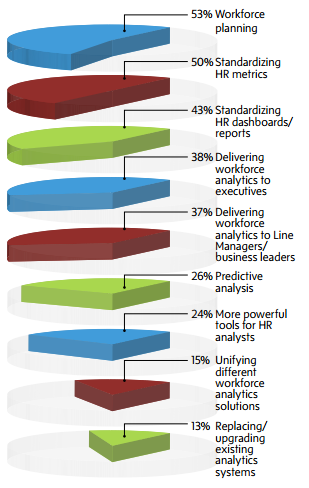
Graphical innovation in delivering workforce analytics

Via Nathan Yau (from a source that evades Google’s reverse image search), another innovation in data visualisation

If you’re the first person to use a data visualisation idea, it’s just possible that it’s because it isn’t a very good idea.

Covering chocolate

Chocolate tastes nice but (sadly) is high in fat, so there’s a lot of potential appeal in news stories that say it’s really terribly healthy. Ideally these stories would come out just before Valentine’s Day, or Christmas, or perhaps Mothers’ Day, but any time of the year will do.

The Herald has a chocolate story, with the lead

Hot chocolate can help older people keep their brains healthy, research has shown.

The research compared blood flow in the brain, and performance on some cognitive function tests. The participants were assigned to drink cocoa with high or low levels of flavonols (aka flavonoids), the chemicals in chocolate that are thought to possibly have beneficial effects.  Based on the headline, you might expect that the researchers saw a difference between the two groups. Sadly, no:

Half the participants were given hot chocolate rich in antioxidant flavanol plant compounds while the other half received low-flavanol cocoa.

Flavanol content made no difference to the results, the researchers found.

That is, participants in both groups improved over the course of the study, regardless of what they drank.  Normally, this would be considered evidence against an effect of chocolate.

For comparison, there’s a more careful story at NPR news, and a less careful one at Forbes. We repeat the  StatsChat position on chocolate “Don’t eat it just for health reasons. If you don’t like it, save it for people who do.”


August 8, 2013

Currie Cup Predictions for Round 1

Some South African readers have asked for Currie Cup predictions and since the methodology should work, I have decided to provide them. Interestingly, the home ground advantage in past games appears to be large, and the predictability of games has varied enormously. Last year’s competition was very hard to predict it seems.

Team Ratings for Round 1

Here are the team ratings prior to Round 1, along with the ratings at the start of the season. I have created a brief description of the method I use for predicting rugby games. Go to my Department home page to see this.

Here are the team ratings prior to this week’s games, along with the ratings at the start of the season.

Current Rating Rating at Season Start Difference
Western Province 4.68 4.68 -0.00
Sharks 3.30 3.30 0.00
Blue Bulls 0.87 0.87 -0.00
Lions -1.52 -1.52 0.00
Cheetahs -3.10 -3.10 0.00
Griquas -6.38 -6.38 -0.00


Predictions for Round 1

Here are the predictions for Round 1. The prediction is my estimated expected points difference with a positive margin being a win to the home team, and a negative margin a win to the away team.

Game Date Winner Prediction
1 Sharks vs. Griquas Aug 09 Sharks 17.20
2 Lions vs. Cheetahs Aug 10 Lions 9.10
3 Western Province vs. Blue Bulls Aug 10 Western Province 11.30