September 8, 2012

Mammogram risks?

Stuff has excellent coverage of a new research paper finding possible risks of mammograms in women under 30 with rare mutations in two specific genes involved in DNA repair (including repair to DNA damage caused by X-rays).

It’s important to stress that the risk findings don’t apply to people in general: X-rays do increase cancer risk for everyone, but only by a tiny amount.  A study published in June this year caused concern by estimating that for every 10,000 CT scans in kids under 10 years old, two cancers would be caused.  That’s a 2 in 10000 additional risk per scan: the additional risk estimated in the breast cancer study is hundreds of times larger.

September 7, 2012

Natural division of labour

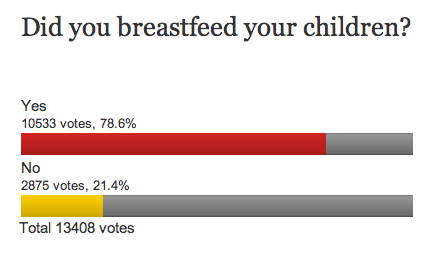
From one of the current clicky polls over on Stuff, some surprising results:

In a representative sample of NZ parents I would have thought the ‘Yes’ figure would have to be at most 50%.

The question is an example of where the passive voice can be an improvement: “Were your children breastfed?” 


NRL Predictions, Finals Week 1

Team Ratings for Finals Week 1

Here are the team ratings prior to Finals Week 1, along with the ratings at the start of the season. I have created a brief description of the method I use for predicting rugby games. Go to my Department home page to see this.

Current Rating Rating at Season Start Difference
Bulldogs 6.56 -1.86 8.40
Cowboys 6.40 -1.32 7.70
Sea Eagles 6.21 9.83 -3.60
Rabbitohs 5.51 0.04 5.50
Storm 5.38 4.63 0.80
Raiders 1.41 -8.40 9.80
Knights 0.01 0.77 -0.80
Dragons -0.37 4.36 -4.70
Broncos -0.53 5.57 -6.10
Sharks -1.17 -7.97 6.80
Titans -2.20 -11.80 9.60
Wests Tigers -2.74 4.52 -7.30
Roosters -5.43 0.25 -5.70
Panthers -6.45 -3.40 -3.00
Warriors -8.08 5.28 -13.40
Eels -8.25 -4.23 -4.00


Performance So Far

So far there have been 192 matches played, 115 of which were correctly predicted, a success rate of 59.9%.

Here are the predictions for last week’s games.

Game Date Score Prediction Correct
1 Knights vs. Rabbitohs Aug 31 6 – 18 1.10 FALSE
2 Broncos vs. Panthers Aug 31 19 – 12 11.07 TRUE
3 Titans vs. Sea Eagles Sep 01 16 – 24 -3.13 TRUE
4 Wests Tigers vs. Storm Sep 01 6 – 26 -0.51 TRUE
5 Bulldogs vs. Roosters Sep 01 42 – 10 13.54 TRUE
6 Sharks vs. Cowboys Sep 02 22 – 36 -0.99 TRUE
7 Warriors vs. Raiders Sep 02 22 – 42 -2.13 TRUE
8 Eels vs. Dragons Sep 02 8 – 29 -0.03 TRUE


Predictions for Finals Week 1

Here are the predictions for Finals Week 1

Game Date Winner Prediction
1 Bulldogs vs. Sea Eagles Sep 07 Bulldogs 4.90
2 Cowboys vs. Broncos Sep 08 Cowboys 11.40
3 Raiders vs. Sharks Sep 08 Raiders 7.10
4 Storm vs. Rabbitohs Sep 09 Storm 4.40


September 6, 2012

The genomic 99%

Today was the release of phase 2 of the ENCODE project, the effort to catalogue all the stuff in the human genome that isn’t genes.  This is a big deal: nearly all our DNA isn’t genes, and ENCODE is a big step towards figuring out what, if anything, it does. (Herald, Stuff have the Associated Press story, New York Times has more, Nature has some good news and comment articles).

Our chromosomes spend nearly all their time curled into little tangles, and some of the ENCODE experiments looked at which bits of the DNA are actually accessible on the outsides of these tangles. Other experiments measured where ‘transcription factors’, which turn genes on and off, attach to DNA. Others looked at which bits of DNA get transcribed into RNA by cells. For complete information, these experiments need to be done for the whole genome, and because the behaviour of DNA is different in every cell type, for many types of cells.  That’s only partially been done, and the project is going to contact indefinitely (or at least as long as they can get money — so far they have spent the equivalent of three full years of the NZ Health Research Council budget, or about 2% of the cost of the Large Hadron Collider).

The headline finding in the news stories is that about three-quarters of the genome can sometimes get copied from the DNA ‘reference’ version to temporary RNA.  We used to think that essentially all RNA copies were from genes, and were made for the purpose of translating the RNA into protein.   Over the years, it has become clear that there’s a lot more varied RNA around than can be explained by making proteins, but ENCODE’s results are much more extreme than expected (by me, at least).  We don’t know what most of the non-gene RNA does, and it’s possible that some of it doesn’t do anything, but some of it must do interesting things that we have no clue about.

ENCODE itself was a great opportunity primarily for US researchers, but the ENCODE results are an opportunity for the whole world, and New Zealand scientists will be looking for ways to take advantage of all this new data.

September 5, 2012

Lotto and abstract theory

There is a recurring argument in statistics departments around the world about how much abstract theory should be taught to students, and how much actual applied statistics. One of the arguments in favour of theory, even for students who are being trained to do applied data analysis, is that theory gives you a way to substitute calculation for thought. Thinking is hard, so we try to save it for problems where it is needed.

The current top Google hit for “big wednesday statistics” offers a nice illustration.  It’s a website selling strategies to increase your chance of winning, based on a simple message

If you play a pattern that occurs only five percent of the time, you can expect that pattern to lose 95 percent of the time, giving you no chance to win 95 percent of the time. So, don’t buck the probabilities.

For example,

When you select your lotto numbers, try to have a relatively even mix of odd and even numbers. All odd numbers or all even numbers are rarely drawn, occurring only one percent of the time. The best mix is to have 2/4, 4/2 or 3/3, which means two odd and four even, or four odd and two even, or three odd and three even. One of these three patterns will occur in 83 percent of the drawings.

Now, if you understand how the lottery is drawn and know some basic probability, you can tell that this advice can’t possibly work, without even reading it carefully. But if you had to explain the fallacy to someone, it might take a bit of thought to locate it.  If 99% of wins are have a mixture of odd and even (actually, more like 98%), why doesn’t that make it bad to choose all odd or all even?

When you have an answer (or have given up), click through for more:

(more…)

Attack of the killer frying pans

There’s a headline in the Herald: Heart disease linked to non-stick cookware: study. There seems to have been some loss in translation for both the article and the headline.

The journal press release says

Exposure to perfluorooctanoic acid (PFOA), a manmade chemical used in the manufacture of some common household products, appears to be associated with cardiovascular disease and peripheral arterial disease in a study of 1,216 individuals

That is, PFOA is used to make non-stick cookware, but cooking with non-stick cookware isn’t an especially important source of it, and the article doesn’t say it is.

Unlike the Teflon in non-stick coatings, which is as inert as a very inert thing, PFOA is quite chemically interesting. There are traces of PFOA in all sorts of things, and it accumulated in the environment, which is why it’s interesting to public health researchers.  If you want to read more, Wikipedia is a bit alarmist about the health evidence but reasonably informative.

The story goes on to say

The study reviewed the levels of the chemical in 1216 people with heart problems.

which isn’t true.  The study used a few years of data from the wonderful NHANES health surveys in the US, which is a random sample of the US population. A subset of the NHANES participants had PFOA levels measured in their blood, and that’s where the number 1216 comes from.  Probably about 50 or so had heart disease, though as far as I can see the article doesn’t actually say.  The researchers compared the PFOA levels in the people with and without heart disease, and then did the same thing for the related ‘peripheral arterial disease’.

Importantly, the heart disease was not measured by a doctor, participants were asked “Has a doctor ever told you that you had coronary heart disease”.  This was at any time in the past, probably years before the PFOA was measured, and the “Has a doctor ever told you..” questions have a much higher error rate than you would expect.

The research is fine as far as it goes, and the researchers admit that what they need is a longitudinal study where PFOA is measured in healthy people who are followed up to see if they become sick. On a small scale this could be done with NHANES, since the data have been linked to Medicare records precisely to allow follow-up studies, though you have to go to a CDC data center to use the linked data set.

From a statistical point of view it’s strange  that the researchers just used four years of NHANES data, from two non-adjacent two-year periods.   The study keeps going year after year, and they are now measuring PFOA and related compounds on greater numbers of people.  As a service to the StatsChat readership, I just spent 15 minutes downloading and analysing the 2007-2008 data, which has PFOA measurements on 2100 people, 80 of whom reported coronary heart disease.  I didn’t do as thorough a job of ruling out other risk factors (such as cholesterol or high blood pressure), but it’s still interesting to note that there is absolutely no sign of an association between coronary heart disease and PFOA levels in the 2007-2008 data.
How to win Lotto … sort of

From today’s Herald …

Choose carefully, $23m is at stake

Today’s $23 million Big Wednesday draw is the fourth-largest prize in Lotto history.

And while there is no secret way to guarantee hitting the jackpot, a mathematician says you can boost chances of not having to share any cash you do win.

Associate Professor of Statistics at the University of Auckland David Scott said: “There’s no way of increasing your chances of winning but it’s possible to increase your chances of getting more money and not having to share it.

“Avoid the numbers of 1 up to 30, where people choose their birthdays.”

Read the rest of the story here.


September 4, 2012

False positives

All decision rules based on observed data make mistakes, whether they are detecting the Higgs Boson or breast cancer.  And the more resources you can invest in each decision, the lower you can (typically) push the error rate.

Copyright enforcement has been a dramatic example of the opposite trend.  A century ago, individuals basically couldn’t infringe copyright in any meaningful way, so the occasional disputes got settled by expensive lawsuits.  In the modern world, copying is easy, so the companies that own lots of copyrights are looking for cheap and dirty ways to detect and stop copying.  Of course, the error rate goes up.

A dramatic example happened last night, when the live video feed for the Hugo Awards ceremony at the World Science Fiction Convention was shut down  by automated filtering systems at the company doing the broadcasting. One of the awards, for “Best Dramatic Presentation, short form” was being given for a Doctor Who script.  Clips from the TV show were shown — with full permission of the copyright owners, not that permission would have been necessary for this purpose — and some computer program made a false positive decision.

[Update: the same thing happened, briefly, to the YouTube feed of the Democratic National Convention later the same week]

Junk food science

The Herald has a story about junk food being linked to dementia.  The story itself is fine, but the sources are interesting:

Too much fatty and sweet food can increase insulin levels causing fat, muscle and liver cells to stop responding to the hormone, Medical Daily explained.

When the brain stops responding to insulin our capacity to think and create new memories is hindered, according to the paper recently published in New Scientist magazine.

 Medical Daily is an aggregator of medical stories — it’s a good place to find interesting research with lively descriptions, but it’s not very selective.    It’s a very popular source for the mass media and for alternative-medicine blogs.   The unusual aspect of the story is the primary source, New Scientist.   New Scientist is not a research journal, it’s a popular science magazine.  It used to be the best source in the world for accessible, detailed, science journalism, and although it’s become a bit sensationalist, there’s still a lot of good material there.   It has never been a primary source, and it hasn’t suddenly started publishing new research.

In fact, the New Scientist article is well worth reading: it describes the theory that some (most?) Alzheimer’s disease is due to insulin resistance in the brain, with quotes from researchers and links to the original research.  The “Type III diabetes” theory of dementia is definitely a minority view, and the evidence for it is thought-provoking, but not definitive.  There doesn’t seem to be any reason why it couldn’t be at least partly true, but the same could have been said for the aluminium theory of dementia in its early days.

The only good thing about the diabetes theory of dementia is that while we’re not great at treating insulin resistance, we’re a lot better at it than we are at treating Alzheimer’s.


September 3, 2012

Gee, thanks!

Stats Chat has had a few nice mentions in dispatches over the past few days, and in this blog-eat-blog world, we thought we oughta share them.

Thanks to Janet McAllister for describing us, along with a couple of other blogs, as “excellent” and “useful” in her New Zealand Herald  column on the weekend.

And this from Public Address, Russell Brown’s thoroughly readable  blog, about his sneak preview of the new, tabloid Herald: The new pages better accommodate the use of infographics – and, happily, editorial staff will have received three training sessions in the use of statistics by the time the paper relaunches. This ought to be a more productive relationship between the Herald and the University of Auckland’s Statistics faculty than the paper having its homework constantly corrected in StatsChat.

Stats Chat just might have run one of those training sessions, on the Monday before last, and we  just might have called it “Learning to Love Statistics: A workshop for journalists”. Thumbs up to the Herald – its journos have had, or are about to have, a session with Statistics New Zealand about how they can best use its marvellous online tools.

And we aren’t out to hassle the Herald, honestly. It’s just that we’re in Auckland, and the Herald’s published seven days a week, and we are still loyal subscribers to the old-fashioned paper product …